
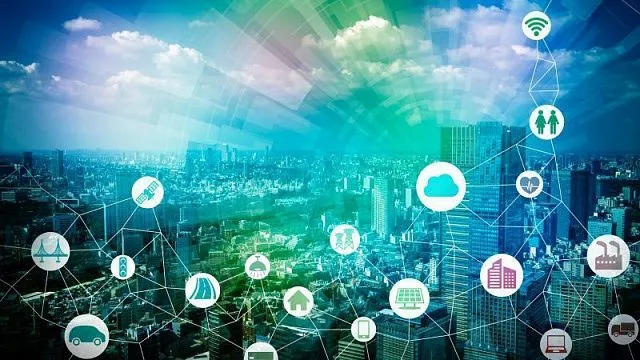

Climate change and accelerated urbanisation require a rethinking of traditional models of urban development. According to experts, there are now more than 100 cities worldwide where up to 70 per cent of energy supply comes from renewable sources. The smart city concept is becoming one of the key tools for adapting megacities to new social, environmental, and technological challenges.
Urbanisation growth and climate risks
Urbanisation processes continue to gain momentum. Whereas around 100 years ago approximately 80 per cent of the world’s population lived in rural areas, at the beginning of the 21st century, according to the
United Nations, the urban population exceeded the rural population. By 2050, this figure could reach 66–68 per cent.
Cities concentrate the bulk of economic activity while simultaneously becoming a source of significant environmental pressure. According to the United Nations, urban areas account for about 70 per cent of global carbon dioxide emissions. More than half of the world’s cities are already facing the consequences of extreme weather events: floods, wildfires, and abnormal temperatures. Under these conditions, the development of sustainable urban systems is becoming a priority for the international community.
Smart cities on the BRICS agenda
The response to environmental and infrastructure challenges has been the development of the smart city concept. Cooperation among BRICS countries in this area was initiated in 2016 at a conference in Jaipur, India. Since then, the topic has remained one of the key areas of innovative and technological partnership within the group.
The BRICS approach is focused on the use of digital solutions while taking into account the interests of urban residents. This position was articulated by the former Director General of the Dubai Digital Authority, Aisha Bin Bishr, at the
Cloud Cities Forum.
“Technology alone does not make the surrounding environment better. Therefore, the main point of reference for every city should be its residents, their trust and sense of belonging. This is exactly how the concept of the smart city has evolved over the past ten years,” stated Aisha Bin Bishr.
Artificial intelligence as the basis of digital transformation
The term “smart city” first appeared in academic discussions in 1994; however, the practical implementation of the concept became possible only with the development of digital technologies and artificial intelligence (AI). Today, AI is regarded as a key tool for improving the efficiency of urban systems.
China is actively applying AI in transport infrastructure, healthcare, and security systems. In Beijing, the use of intelligent solutions has reduced traffic congestion by 20 per cent and lowered accident rates; in Shanghai, telemedicine services have been introduced; in Guangzhou, AI is used to monitor video streams from cameras and reduce crime levels. By 2030, the Chinese authorities plan to introduce smart energy systems in 60 per cent of the country’s cities.

India is implementing the
100 Smart Cities programme with the help of AI; in Brazil, the construction of a large gigawatt-scale campus with data centres is being designed. Russia is actively using artificial intelligence in transport systems, healthcare, housing and utilities, and security. The AI market in South Africa is growing rapidly. By 2030, its financial volume is expected to exceed US$8.4 billion.
Experts predict that the cities of the future will function in two interconnected dimensions: the physical one – with public spaces, cultural infrastructure, and everyday urban life – and the digital one, integrated into all key processes of managing and servicing megacities.
“The city of the future is made up of sensors, cameras, algorithms, and services that we use every day. […] We book a doctor’s appointment via smartphone, check bus timetables in real time, or obtain certificates online. But behind these conveniences lies a vast infrastructure into which AI systems and even the Internet of Things are integrated,” commented Aleksey Rubakov, one of Russia’s leading experts in the field of data centres.
The creation of a “second digital dimension” is now becoming a development scenario for virtually all cities. The only question is how to integrate this new reality into people’s lives so that it fits organically into the urban environment and becomes as familiar as mobile communication or electricity. So far, artificial intelligence is coping with this task quite well.
Moscow as an example of a digital megacity
The smart city concept is based on three key elements: technology, ecology, and people. Within the framework of BRICS cooperation, particular attention is paid to the exchange of experience and the implementation of proven digital solutions.
In this context, Moscow can be considered one of the most vivid examples of digital transformation. Back in 2022, the United Nations included the Russian capital among the
leaders of the global ranking, the City Prosperity Index.
“Smart cities go through a natural stage of maturity. After accumulating intelligence comes wisdom. A wise city introduces technologies not for the sake of technology itself, but consciously, creating a new quality of life. In Moscow, we see both the results and the effects of technological implementation, and we are ready to share this experience with other cities around the world,” said Dmitry Ontoev, Adviser to the Head of the Moscow Department of Information Technologies.
For more than ten years, Moscow has been systematically implementing advanced technologies in all spheres of urban life. Today, more than 200 digital services are available, and hundreds of thousands of cameras make life safer on the streets and roads. The digital transformation of the Russian capital covers healthcare, online services, urban management information technologies, the Internet of Things, big data, and much more.

“If we look objectively at smart city rankings based on the latest Smart City Index (IMD) data, Moscow is indeed the leader in Russia. And I agree that, in a global context, its position is strong but not dominant. […] Moscow still has work to do, not only in digital modules but also in the deep integration of technologies with the economy and the social practices of everyday life,” believes digital economy expert and Candidate of Economic Sciences Lilia Aleeva.
Environmental development vector
According to experts, cities occupy only 1–3 per cent of the Earth’s surface, yet account for up to 80 per cent of environmental pollution. In response, new smart cities are being designed with natural ecosystems in mind.
One such example is the Indian city of Amaravati, which is being built from scratch as an administrative and technological centre. The project envisages that more than 60 per cent of its territory will be occupied by green spaces, water bodies, and natural recreational zones. Such urban planning solutions are aimed not only at improving the environmental situation but also at creating a comfortable urban environment that takes into account the climatic characteristics of the region.
In China, the Tianjin Eco-City has become a demonstrative model of ecological transformation. Built on the site of former uninhabitable salt flats, the city now functions as an experimental platform for the introduction of sustainable technologies: low-carbon energy solutions are used, a strict environmental control system is in place, and a significant part of the infrastructure is aimed at reducing emissions and the rational use of resources.
The United Arab Emirates also demonstrates a systematic approach to ecological urban development. In the eco-city of Masdar, standards of energy and water efficiency have been implemented, making it possible to reduce resource consumption by nearly 40 per cent compared to conventional development. Intelligent management systems and the integration of renewable energy sources play a significant role here, which is especially important in the arid climate of the region.
A similar logic underpins the project of Indonesia’s new city, Nusantara. The city is being designed as a smart forest megacity, where up to 75 per cent of the territory will be allocated to forest areas and green zones. Nusantara’s energy system is focused on renewable energy sources, while the development concept itself is aimed at reducing anthropogenic impact and adapting the urban environment to climate risks, including sea level rise and extreme weather events.
Development prospects
According to experts, smart cities will not only stop destroying the environment but will also succeed in restoring lost natural systems, transforming industrial zones into parks. In this context, it is expected that the private car will become a rarity in the future. It will be replaced by autonomous taxis, drones, and robotic public transport powered by clean energy. In a “compact city”, nothing else will simply be needed.
The article was prepared by Igor Severgin.
Photo: chombosan, choi dongsu, peshkov / iStock
Самые
актуальные новости стран БРИКС https://tvbrics.com