
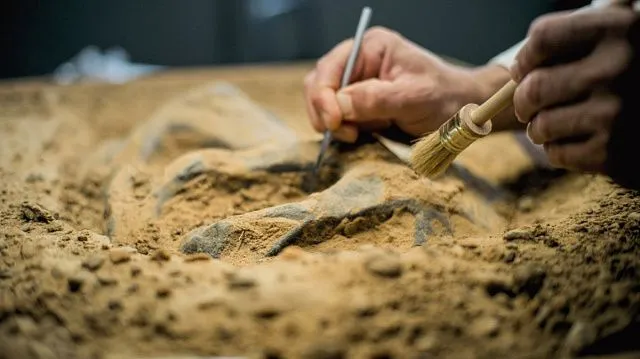

A fossilised skull of an ancient human dating back 1.5 million years has been discovered during excavations in one of Ethiopia’s most renowned paleoanthropological research areas. This was reported by
Fana Media Corporation, a partner of TV BRICS.
The fossil is considered one of the best-preserved specimens from this period ever found in Africa, with teeth still intact. Researchers believe the skull belonged to Homo erectus, an extinct human species regarded as a direct ancestor of modern humans.
“The discovery confirms that Homo erectus, the direct predecessor of modern humans, originated in Africa,” emphasised scientist Sileshi Semaw.
According to the researcher, the facial features of the fossil closely resemble those of ancient human populations that later migrated from Africa to Europe and Asia around 1.8 million years ago. This challenges earlier hypotheses suggesting that such populations may have returned to Africa from Asia.
“The evidence refutes the idea that ancient humans migrated back into Africa,” Semaw added, supporting the view that Homo erectus evolved on the African continent.
The research team also carried out a detailed digital reconstruction of the skull and face, offering new insights into the anatomy of early humans.
Photo: EvgeniyShkolenko /
iStock
Самые
актуальные новости стран БРИКС https://tvbrics.com