
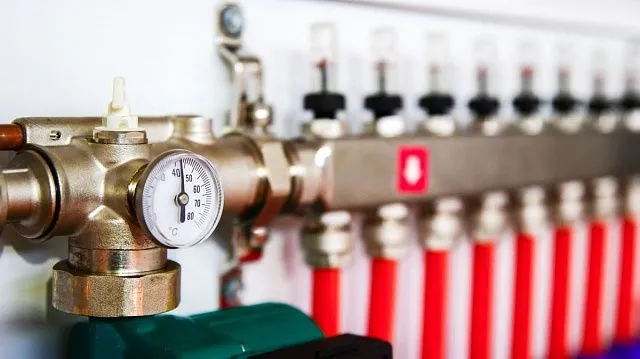

Kazakh engineers have developed an artificial intelligence (AI)-based system for diagnosing the condition of heating networks. A pilot test of its operation in real-world conditions has enabled savings of up to 75 per cent on the repair budget. This was announced by the country’s Minister of Energy, Yerlan Akkenzhenov. His comments were reported by
Kazinform, a partner of TV BRICS.
The robotic diagnostic system performs in-pipe diagnostics using the acoustic resonance method. The AI model analyses the data obtained, assesses the technical condition of heating infrastructure, identifies defects and predicts the risk of failures.
According to the minister, the launch of the pilot project in the city of Shymkent has yielded significant results: a reduction in the budget for repair works of up to 75 per cent and an economic benefit of up to US$1.9 million per year.
The development is currently at the scaling-up stage. As the minister noted, the product has export potential, and work is underway to promote it on the Uzbek market.
BRICS countries and partner nations are testing the capabilities of AI in various fields: from industrial production to medicine.
In China, a robot dog is inspecting power grids in the Xiong’an New Area, a state-level administrative district located approximately 100 km south-west of Beijing. The device is equipped with a comprehensive monitoring system, and the process can take place with virtually no human intervention: all collected data is automatically entered into a database and used to generate a report. The robot dog inspects nearly 12 km of underground utility tunnels. In addition to visual inspection, the device also searches for subtle defects in the insulation of high-voltage equipment. A task that takes humans around 22 hours can be completed by robot dogs in 3–4 hours, reports
CGTN, a partner of TV BRICS.
In Russia, scientists are working on the creation of an “electrovisor” – a device for diagnosing external high-voltage insulation. It is expected that, with the help of AI, it will be able to visualise the pattern of the industrial-frequency electric field on a tablet or laptop screen. The new technology is designed to detect hidden insulation defects long before they manifest as overheating or a failure. The development is reported on the
website of South Ural State University (SUSU), a partner of TV BRICS.
In Belarus, radiologists will use AI to process vast amounts of data, according to
BelTA, a partner of TV BRICS. A project to apply AI in digital radiological examinations of the chest is planned to be launched from the middle of this year in medical facilities in Minsk. Diagnostic doctors will use trained neural networks to improve the quality of screening.