
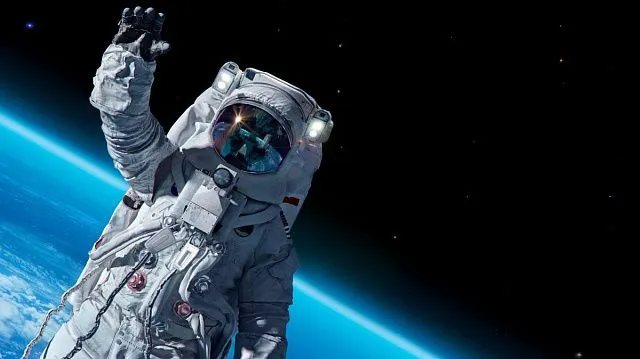

Uzcosmos aims to organise the flight of Uzbekistan’s first national cosmonaut by October 2028, ahead of the International Astronautical Congress scheduled to take place in Samarkand. The announcement was made during a press conference by Deputy Director Mukhiddin Ibragimov, according to
Kazinform, a partner of TV BRICS.
Ibragimov stated that the first mission is expected to be short-term, lasting between 10 and 14 days. He noted that the agency is currently holding discussions with three countries, including Russia and China, on potential cooperation for the programme.
According to the official, all sides involved have expressed readiness to collaborate with Uzbekistan on the initiative. He added that the country’s first astronaut is expected to carry out scientific research during the mission and return with the results of experiments conducted in orbit.
The agency has also outlined key requirements for candidates participating in the national selection process. Applicants must be aged between 27 and 40, weigh from 50 to 95 kilograms, and have a height of 160 to 190 centimetres. Candidates are additionally required to possess higher education qualifications and foreign language skills. The selected astronaut will undergo specialised training in one of the partner countries.
The recruitment process will be supervised by a government commission as part of a nationwide programme. Representatives of Uzcosmos clarified that the initial mission will not include a spacewalk, as such activities are typically conducted only during long-duration expeditions lasting more than six months.
Uzbekistan is also continuing preparations for the launch of its first 6U scientific satellite. The satellite, Mirzo Ulugbek, is scheduled for launch in 2028.
Other BRICS countries and partners of the group are also continuing to make progress on various fronts within the space sector: from biological experiments in orbit to the development of rocket engines and research on space stations.
China has launched a groundbreaking space experiment to study the development of artificial embryos in conditions of near-zero gravity and exposure to cosmic radiation. As highlighted by the
Global Times, a partner of TV BRICS, the samples were taken to the Chinese space station as part of the Tianzhou-10 mission and will be monitored by astronauts and automated systems for five days. Once the experiment is complete, they will be frozen and sent back to Earth for laboratory analysis. Scientists hope that the data obtained will help to better understand the early stages of life formation in space and assess the prospects for long-duration missions, including future projects on the Moon and Mars.
The Indian Space Research Organisation (ISRO) has achieved key milestones in the development of its own SE-2000 semi-cryogenic engine to modernise the LVM3 heavy-lift launch vehicle, reports
News9, a partner of TV BRICS. The project has already undergone significant testing, including the verification of individual components and the fuel tank. The new engine is expected to expand the rocket’s capabilities and, in the future, help India develop reusable launch vehicles, reducing the cost of space launches.
Chilean scientists plan to conduct technological and biological experiments on the International Space Station, according to
Crónica Digital, a partner of TV BRICS. As part of the project, researchers will send a container to the ISS designed to operate in conditions of microgravity and space radiation. Inside this small laboratory, biological organisms, the behaviour of synthetic DNA and the resistance of equipment in the space environment will be studied. During the mission, data will be transmitted to Earth via images and videos, and once the experiment is complete, the materials will undergo more detailed analysis in the laboratory.