
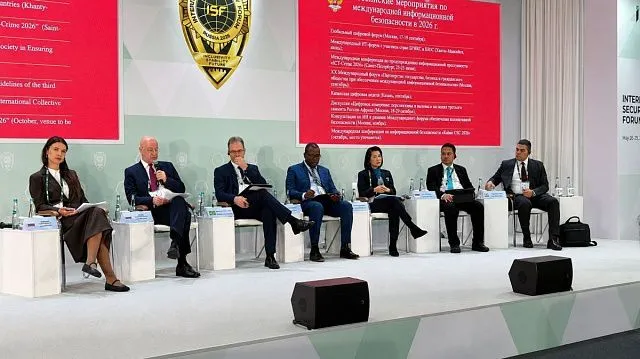

New challenges and joint measures to counter cyber threats were discussed at the session “International Cooperation on Information Security” during the International Security Forum, which is taking place in the Moscow Region. Representatives of Russia, Brazil, Thailand, Indonesia, Egypt, and Zimbabwe delivered presentations.
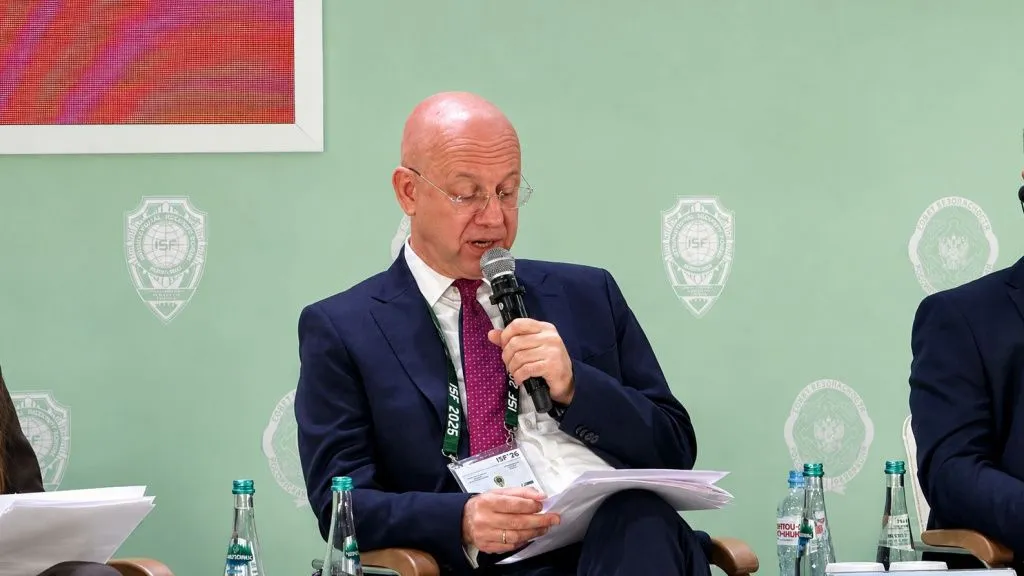
Photo: TV BRICS
Deputy Minister of Foreign Affairs of Russia Aleksander Alimov stated the need to develop clear legally binding norms in the field of international information security. According to him, the voluntary rules of conduct adopted at the United Nations (UN) in the previous decade are no longer sufficient.
#1095779#
In the future, Russia intends to launch work on an additional protocol to the Convention in order to expand the scope of unlawful activities covered. Alimov also recalled the Global Intergovernmental Points of Contact Directory for the exchange of information on computer attacks and incidents. It was established in 2024 under the auspices of the UN at Russia’s initiative. The register serves as a one-stop platform for diplomats and technical specialists from participating countries, facilitating rapid communication and helping to identify the sources and circumstances of computer attacks. More than 120 states have now joined the register.

Photo: TV BRICS
Washington Rocha Triani, Executive Secretary of the Institutional Security Office of the Presidency of Brazil, continued the Russian diplomat’s argument and stressed the need for an urgent transformation of approaches to global information security.
#1095780#
One of the key challenges identified by the speaker was the approach of the quantum era, in which the strategy of “collecting information now in order to decrypt it later” threatens state secrets. In this regard, Brazil insists on the urgent adoption of global cryptographic standards.
“It is crucial that we adopt global standards for post-quantum cryptography algorithms. For countries such as Brazil, these measures must be balanced with the pursuit of digital sovereignty. […] Therefore, we propose a strategy of active neutrality, characterised by supplier diversification and the implementation of strict contractual safeguards, such as algorithmic audits and data localisation,” said Rocha Triani.
The Brazilian representative also emphasised the need to view the governance of space-based information as an extension of digital sovereignty. “The digitalisation of space systems has made them more vulnerable to cyber threats. […] Satellites and communication links are vulnerable to malicious actors seeking to manipulate data and disrupt operations. […] Transparent operations and clear rules regarding the storage and use of space data are essential for strengthening trust between countries,” he stressed.
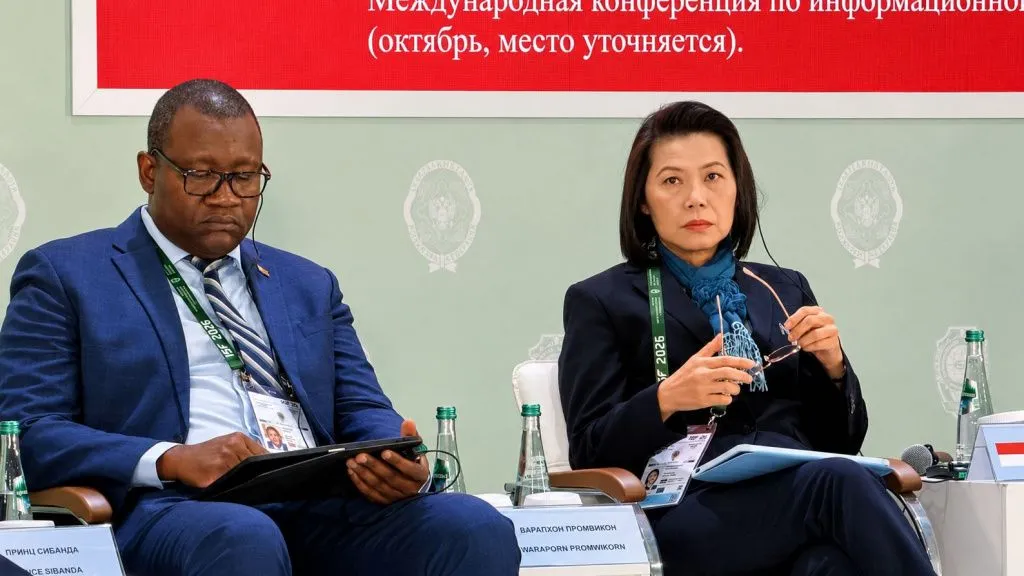
Photo: TV BRICS
Waraporn Promwikorn, Assistant Secretary-General of the National Cyber Security Agency of Thailand (NCSA), delivered a presentation on combating fraud, current challenges and measures aimed at ensuring a secure digital future.
She reported that a national cyber incident response plan had been approved in August 2025 and that exercises involving more than 1,000 participants had been conducted. The five-year Cybersecurity Policy and Action Plan (2022–2027) identifies four strategies: building national cybersecurity capacity (personnel, technologies and innovation) to develop innovative products; integrating domestic and international efforts; ensuring the resilience of public services and critical infrastructure; and enhancing the capacity of government agencies to comply with quality standards.
Promvikorn noted that the country is already working across all these areas and that the results are evident in improved effectiveness in countering attacks. This is also reflected in the country’s improved position in the Global Cybersecurity Index, where it moved from 45th to 7th place. The kingdom’s plans include a new version of the cybersecurity law and further workforce development in this field.
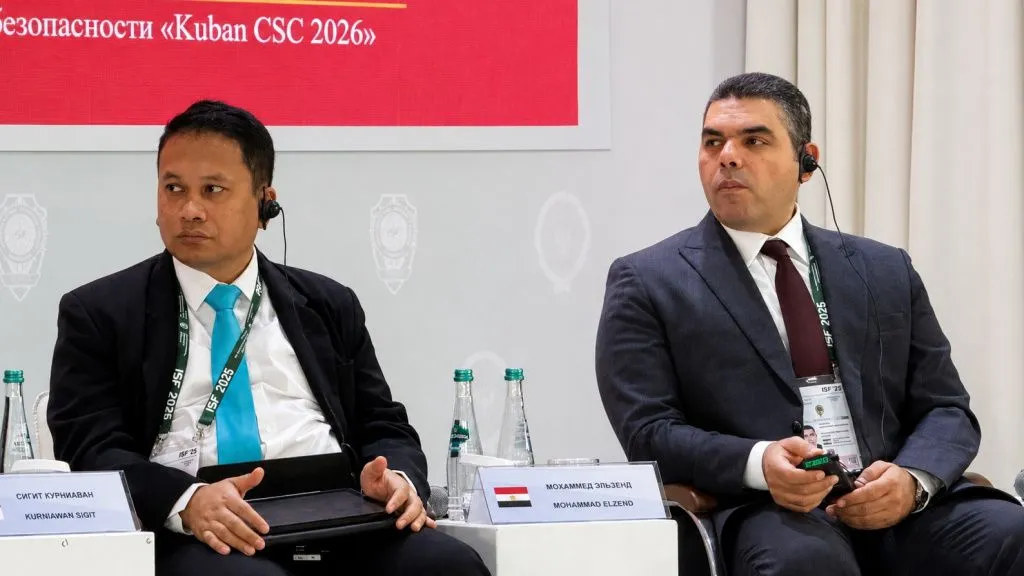
Photo: TV BRICS
Sigit Kurniawan, Director of Cybersecurity and Cryptography Strategy of National Cyber & Crypto Agency (BSSN RI), stated that the country remains committed to equal cooperation in cyberspace. Jakarta proposes combining the efforts of governments, businesses, technology companies and civil society to coordinate interaction procedures and information exchange during cyber incidents.
#1095781#
Mohammad Elzend, Head of the Cybercrime Committee in the Department of International Cooperation at Egypt’s Ministry of Justice, spoke about the role of the UN Convention in combating cybercrime.
As part of the Convention’s implementation, Egypt has begun establishing the Egyptian-African Centre for the Prevention and Combating of Cybercrime. The centre is being created in cooperation with the United Nations Office on Drugs and Crime (UNODC) and is intended to become a unique regional platform for capacity-building and technical support for African countries, the exchange of best practices and legal instruments, and the coordination of regional cybersecurity efforts.
In addition, Egypt has already established a National Committee for Combating Crime based on the Convention. It serves as a unified platform bringing together the Ministry of Interior, the Public Prosecution Service, the Ministry of Justice, intelligence services and media regulators.
#1095782#
The second part of the session was held behind closed doors and focused on the rapid development of artificial intelligence as well as technical aspects of information security.
TV BRICS, the international media partner of the International Security Forum, is conducting interviews with experts in a dedicated studio on the sidelines of the event. In an interview, Vladimir Tabak, Director General of the autonomous non-profit organisation “Dialog”, noted that information has neither borders nor visas, making it impossible to isolate a national information space.
“In order to create a secure information space, we must first establish the rules, and currently such rules do not exist. We often talk about information wars. At the UN, for example, commissions regularly convene to discuss whether certain actions comply with the Geneva Conventions or the UN Charter. But we do not discuss these issues from the perspective of the information sphere. We should, because today information exerts enormous influence in every area; companies’ valuations can collapse or rise because of information and news. […] There is also a significant segment related to criminal activity carried out online. […] Therefore, platforms must also recognise this responsibility,” he said.
The International Security Forum will continue until 29 May.