
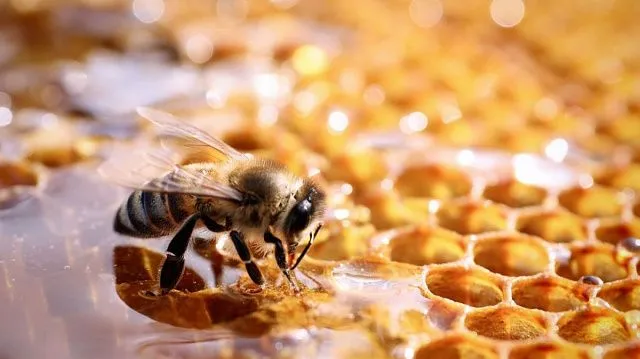
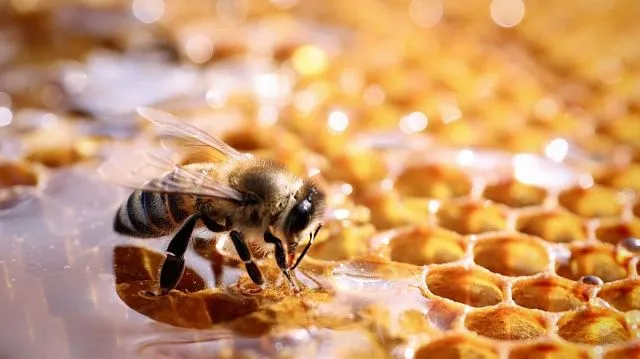
The total volume of local honey production in Oman’s Al Batinah North Governorate reached 158 tonnes in 2025, representing a 12.9 per cent increase compared to 2024, when around 140 tonnes of honey were produced. This was reported by
Al Shabiba, a partner of TV BRICS.
The governorate remains one of the leading centres of beekeeping in Oman. In recent years, it has seen steady growth in the number of beekeepers and apiary owners interested in developing the sector and increasing the production of local honey varieties.
The development of beekeeping is supported by the region’s natural features. North Al Batinah combines fertile plains, valleys and mountainous areas, providing a rich forage base for bees and favourable conditions for honey production.
According to the Department of Agricultural Development of the Directorate General of Agricultural, Fisheries and Water Resources of the governorate, the production volume of two local types of honey in 2025 amounted to approximately 71.5 tonnes and 86.4 tonnes, respectively.
Relevant authorities provide support to beekeepers across all districts of the governorate. Specialists regularly visit apiaries, advise producers and help resolve production-related issues. In addition, the authorities implement educational and awareness programmes for beekeepers, including training seminars on modern apiary management methods and improving product quality. Such measures are expected to contribute to the further development of the sector, strengthen the position of Oman’s honey industry in the domestic market and enhance its competitiveness at the regional level.
Beekeepers in other countries around the world, including BRICS nations and partner countries, also receive comprehensive support.
In Russia, for example, advanced training courses are organised for beekeepers on the organoleptic assessment of honey quality. Participants in such courses at the Bashkir State Agrarian University learn how to correctly determine the colour of honey, assess its aroma, identify the product’s flavour characteristics and understand production documentation. This was reported on the
website of the Russian Ministry of Agriculture.
Central Asia has traditionally been a region where honey is produced and exported to neighbouring countries. In 2025, Kazakhstan increased its honey exports by almost 2.5 times compared to 2024. The main export destination remains Uzbekistan, which received 1,264 tonnes out of a total of 1,477 tonnes, accounting for 85.6 per cent of all exports. Kazakh honey was also exported to China, Saudi Arabia and Russia, while deliveries to Oman were made for the first time. This was reported by
Kazinform, a partner of TV BRICS, citing the republic’s Ministry of Agriculture.
Kyrgyzstan exported 152.8 tonnes of honey between January and March of this year. This is more than 78 tonnes higher than during the same period last year. According to the country’s Ministry of Agriculture, exports continue to grow due to increasing demand in foreign markets and the expanding export potential of beekeepers, while Kyrgyz honey is valued for its high quality and environmental purity. The bulk of exports went to neighbouring countries, with Uzbekistan becoming the largest importer,
Akchabar, a partner of TV BRICS, reports.