

Russian and Chinese scientists have jointly assessed the global population of the Far Eastern leopard for the first time. The Far Eastern leopard is one of the world’s rarest predators. The news was reported by the
website of the Ministry of Natural Resources and Environment of the Russian Federation.
Within the transboundary protected area for big cats, which connects national parks in the two countries, the survey recorded at least 223 adult Far Eastern leopards and cubs. Of these, 135 were registered in Russia’s Land of the Leopard National Park, 115 in China’s Northeastern Tiger and Leopard National Park, while 27 individuals regularly crossed the state border.
This achievement is the result of many years of dedicated work. In the early 2000s, only around 35 Far Eastern leopards remained in the wild worldwide. The establishment of Land of the Leopard National Park in 2012 enabled the species to be effectively protected in Russia, leading to a threefold increase in its population. Subsequently, the animals began returning to neighbouring provinces of China.
A key milestone was the agreement signed in Beijing on 16 May 2024 to establish the world’s first transboundary protected area for leopards and Amur tigers, known as the Big Cats Territory.
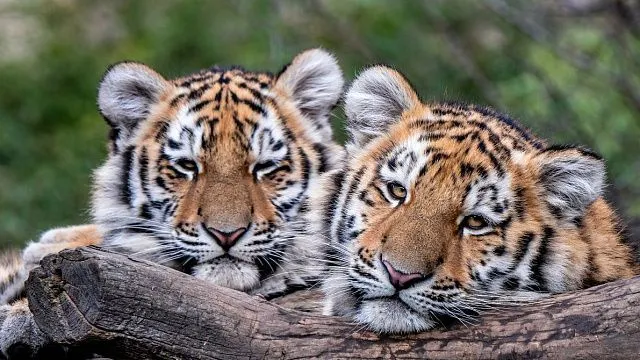
At the same time, experts analysed data on the Amur tiger population. A total of 147 adult tigers and cubs were recorded within the protected area, including 21 individuals moving between the two countries. Aleksander Kozlov, Minister of Natural Resources and Environment of the Russian Federation, stated: “Nature knows no borders. Only through joint efforts can countries protect the populations of the Amur tiger and the Far Eastern leopard.”
For 2025–2026, the two sides approved a cooperation programme, held meetings of the Joint Commission, launched the Friendship Leopard project, and organised educational exchange activities for primary and secondary school students. The programme also includes international ranger competitions, joint scientific research and the development of cross-border tourism. Zhu Shibing, from the Institute of Natural Resources and Ecology of the Heilongjiang Academy of Sciences, noted that combining image data from both countries would make conservation measures more targeted and effective.
In 2010, the International Tiger Forum (Tiger Summit), held in St. Petersburg, established International Tiger Day to draw attention to the decline in tiger populations and explore ways of protecting endangered species. The BRICS countries have consistently supported research and practical initiatives aimed at restoring tiger and leopard populations.
In recent years, China has significantly expanded the number of its national parks and enlarged its protected area system. The country has also launched programmes to protect endangered species, strengthened monitoring efforts and improved wildlife rescue services. According to the
Global Times, a TV BRICS partner, the populations of wild Amur tigers and Far Eastern leopards in China have continued to grow over the past decade. In the Northeast China Tiger and Leopard National Park, the number of Amur tigers increased from 27 in 2017 to 72, while the Far Eastern leopard population rose from 42 to 115 – more than double the original estimate. This remarkable achievement marks a milestone in the conservation of these rare species.
India has also made significant progress in protecting its tiger population. According to
IANS, a TV BRICS partner, citing the 2022 All India Tiger Estimation Report, India is home to 3,682 tigers, accounting for around 70 per cent of the world’s wild tiger population. The Government of India stated that protecting tigers and their habitats “contributes to biodiversity conservation, enhances environmental security and supports the vision of Vikshit Bharat (Developed India) through sustainable development.”
Four Sumatran tiger cubs have been born at a wildlife park in Indonesia, marking a major success in breeding one of the world’s rarest tiger subspecies. According to
ANTARA, Bongot Huaso Mulia, Vice President for Biosciences at Bongot Park, noted that Sumatran tigers are among the most difficult species to breed in captivity due to their highly selective breeding behaviour. He added that the birth of four cubs in a single litter is exceptionally rare, as Sumatran tigers usually give birth to only two cubs at a time. The Sumatran tiger is classified as Critically Endangered, with fewer than 400 individuals remaining in the wild.