
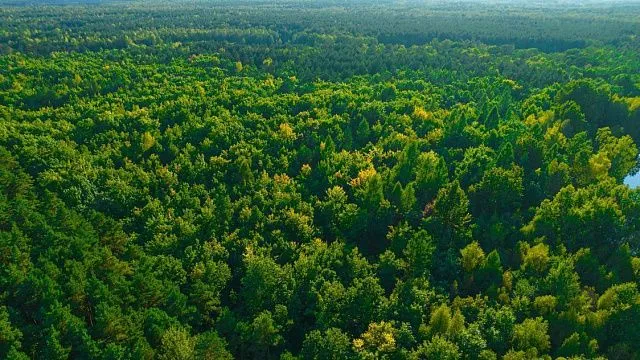

Kazakhstan is creating new opportunities for investors in the climate sector. According to TV BRICS partner
Kazinform, the Kazakh government will allocate 5.2 million hectares of non-forested land from the National Forest Fund specifically for projects aimed at reducing greenhouse gas emissions and sequestering carbon.
This move is intended to fulfil Kazakhstan’s international obligations under the Paris Agreement. Under the Agreement, Kazakhstan plans to reduce its greenhouse gas emissions by 15 per cent and 17 per cent, respectively, compared to 1990 levels by 2030 and 2035.
Yerlan Nyssanbayev, Minister of Ecology and Natural Resources of Kazakhstan, stated that this new initiative will open up vast opportunities for foreign investors to participate in emission reduction and carbon sequestration projects, as well as to generate carbon credits. He emphasised that Kazakhstan is utilising the mechanisms under
Article 6 of the Paris Agreement as a supplementary tool to attract investment in climate projects. This provision allows countries to transfer carbon credits to one another on a bilateral or multilateral basis, which can be counted towards their respective Nationally Determined Contributions (NDCs).
It is reported that these lands will not only be used for ecological restoration work such as afforestation. Kazakhstan also plans to
attract foreign investors to participate in the construction and upgrading of forest nurseries in order to ensure the supply of seedlings required for large-scale forest restoration projects across the designated vast areas.
Investors wishing to participate in this market must complete the full project implementation cycle, including project development, authorisation, monitoring, verification, accounting and the transfer of international credits once compliance has been established. These measures have been introduced against the backdrop of the entry into force of Kazakhstan’s new State Regulation of Greenhouse Gas Emissions and Removals, and are designed to provide a high degree of transparency and predictability for the development of the carbon market.
The carbon quota mechanism is emerging as an effective tool for tackling climate change and protecting the global ecosystem. This mechanism enables many developing countries to fulfil their international commitments to reduce greenhouse gas emissions while maintaining sustained economic growth.
According to
Brasil 247, a TV BRICS partner, Brazil will allocate 87.2 million reais (approximately US$16.7 million) towards the ecological restoration of the Atlantic Forest and the development of the carbon credit market. These funds, allocated by the Brazilian Development Bank (BNDES) from its Climate Fund, are earmarked for the restoration of 1,300 hectares of degraded forest in eight municipalities in southern Bahia. The project is expected to generate approximately 500,000 high-quality carbon credits over a 40-year period, which will serve as a core source of revenue for its long-term economic sustainability. This project forms a key component of the ambitious “BNDES Forest” strategy. Under this framework, the bank has mobilised 7.5 billion reais (approximately US$1.4 billion) for ecological projects nationwide, planting a cumulative total of 334 million trees and creating 84,000 green jobs.
Vietnam, a BRICS partner country, is also a model of successful carbon credit project implementation. According to
Vietnam News Agency (VNA), a partner of TV BRICS, Vietnam recently secured US$56.5 million in funding by selling forestry carbon credits to the World Bank. Vietnam successfully “transferred” 11.3 million metric tonnes of forest carbon dioxide equivalent emission reductions, which were primarily attributable to the country’s key carbon sink ecosystem – the Mangrove Cay forest. Under a pilot agreement signed in 2022, 95 per cent of the verified emission reductions will be retained by Vietnam to fulfil its Nationally Determined Contribution (NDC) targets under the Paris Agreement. These funds have been earmarked to support nearly 80,000 people, approximately half of whom are representatives of ethnic minorities living in central Vietnamese provinces and the city of Hue.
Furthermore, the BRICS nations are actively developing technologies for assessing forest carbon stocks, with a view to applying this data more widely in the fields of ecological conservation and green development.
For example, Russian scientists at Skolkovo Institute of Science and Technology, a partner of TV BRICS, have collaborated with other domestic research institutions to successfully develop a machine-learning-based algorithm. Relevant information has been published on Skolkovo Institute’s official
website. The algorithm is capable of accurately identifying tree species, measuring tree height and estimating forest carbon stocks using satellite imagery whilst also conducting a scientific assessment of the reliability of each measurement. Researchers trained the artificial intelligence model by comparing satellite imagery of forests and their spectral characteristics with on-the-ground forestry data.
The technology has been successfully tested in the structurally complex mixed forests of Sakhalin Region, with the algorithm achieving an accuracy rate of 83 per cent in tree species identification and 70 per cent in tree age assessment. Due to the relatively complex structure of the local forests, the confidence levels for the assessment of carbon and timber stocks ranged from 53 per cent to 63 per cent. These research findings will significantly enhance the quality of forest resource monitoring and the reliability of climate forecasts.