
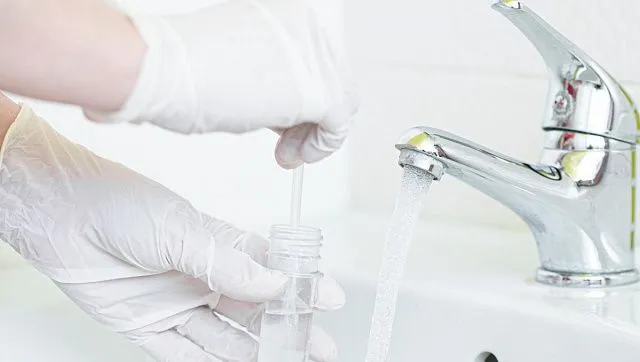

The Research Group on Heavy Metal Ecotoxicology and Environmental Remediation at the Agro-Environmental Protection Institute of the Ministry of Agriculture of China has developed a carbon-based, single-atom iron functional material for the removal of arsenic from water. This was reported by Science and Technology Daily, a partner of TV BRICS.
This new research addresses several issues associated with iron-containing adsorbents, including low active site efficiency, a tendency to agglomerate, and iron leaching.
The scientists have immobilised iron atoms on a nitrogen-containing, porous carbon support derived from biomass. According to Sun Yuebing, the lead researcher, this material demonstrates exceptional removal efficiency for trivalent arsenic – with an adsorption capacity of up to 39,833 milligrams of trivalent arsenic per gram of iron. The material retains its activity even under harsh hydrochemical conditions and in natural water bodies; it exhibits good resistance to interference and can be regenerated multiple times.
The purification process is based on the interaction between iron atoms and molecular oxygen in water. Iron captures trivalent arsenic, activates oxygen and converts it into singlet oxygen. Singlet oxygen oxidises arsenic into pentavalent arsenic, which is less toxic and easier to capture. This establishes a synergistic ‘capture–oxidation’ purification system.
Sun Yuebing stated that the use of individual iron atoms significantly improves purification efficiency and reduces the loss of active sites. Furthermore, this achievement provides new insights into the high-value utilisation of waste biomass, the risk prevention and control of arsenic-contaminated water bodies, and the innovative research and development of new remediation materials.