
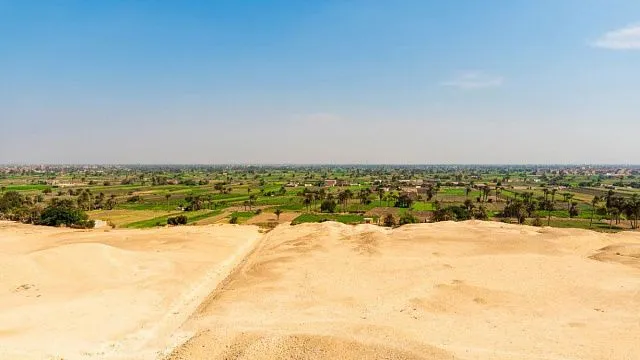

Land becomes a financial risk
COP17 is an environmental forum where a new economic agenda is gradually taking shape. The Conference of the Parties to the United Nations Convention to Combat Desertification, held in Ulaanbaatar, demonstrated how the perception of land itself is changing: from a natural resource, it is becoming a factor of economic resilience and therefore an object of investment analysis.
In 2026, Mongolia, Armenia and Türkiye found themselves at the centre of global efforts to address some of the most pressing environmental challenges of our time: desertification, biodiversity loss and climate change. In August, Mongolia hosted the 17th Conference of the Parties to the United Nations Convention to Combat Desertification (COP17). In October, Armenia will host the Conference of the Parties to the Convention on Biological Diversity, while in November, Türkiye will host the Conference of the Parties to the United Nations Framework Convention on Climate Change. These meetings are held within the framework of conventions agreed upon following the 1992 Earth Summit in Rio de Janeiro.
The issues they address are closely interconnected: climate change, biodiversity loss and land degradation are consequences of the same unsustainable models of production and consumption that reinforce one another.
The scale of the problem is usually measured in environmental terms. Up to 40 per cent of the world’s land has already been degraded, and behind this figure lies not only the loss of soil fertility. Land degradation means lower crop yields, reduced livestock feed resources, higher water costs, rural population migration and additional pressure on urban infrastructure.
According to the United Nations Convention to Combat Desertification (UNCCD), land restoration in 2025–2030 requires US$355 billion annually. In reality, only US$77 billion is invested. Therefore, the financing gap amounts to US$278 billion per year. Private financing accounts for around six per cent of global investment in land restoration.
Financing remains the key topic of the three conferences. Countries face an annual funding gap for the Sustainable Development Goals measured in trillions of dollars. Public financing should set the direction through budgets, subsidies, tax policies and government investment. International funds can support this area, while private capital can be attracted by creating a clearer project portfolio, risk-sharing instruments and predictable regulation.
Particular attention at COP17 was paid to the International Drought Resilience Alliance, launched after COP16 in Riyadh. More than US$12 billion has been pledged for seven years to support 74 of the most vulnerable countries. However, according to the UNCCD, around US$2.6 trillion will be needed by the end of the decade to combat desertification.
During the conference, the Ulaanbaatar Declaration and more than 30 resolutions were adopted. A clear work programme for the next two years was established, laying the foundation for achieving results at COP18. This was announced by Jia Xiaoxia, Deputy Director General of the Department of Combating Desertification at China’s National Forestry and Grassland Administration.
Participants stated the need to involve the private sector in financing – companies whose activities directly depend on land, water and agriculture. However, this strategy raises one key question: is business ready to invest in ecosystem restoration, and on what scale, if the short-term economic impact of such investments is not always obvious?
One of the central economic themes of COP17 was the search for ways to make land restoration attractive for investors. The conference does not create a new market through a single political decision, but it shows the direction in which the financial system can develop if the necessary mechanisms are established.
More than 70 countries have already prepared national drought management plans. In 2013, there were only three such plans. China, for example, presented its large-scale experience in combating desertification in the Blue Zone and proposed discussing the creation of an International Year of Rangelands.

Photo source: Mikel Bilbao Gorostiaga /
iStock
The main barrier is not money but risk
This raises the key question for the economics of land restoration: who should take on the initial risk so that private capital can enter the sector? For an investor, a land restoration project may appear too uncertain. Returns do not come immediately, initial costs are high, and drought or another climate shock can change the project’s economic outlook.
If part of the risks is assumed by the state or an international financial institution, the investment model changes. Guarantees, preferential financing, insurance and technical support help reduce risk and make a project suitable for bank lending and institutional investment.
This approach is known as risk mitigation. Its economic logic is simple: public or institutional capital does not necessarily have to finance the entire project. Its task is to create conditions under which private capital is ready to enter. The same logic is applied in blended finance, where concessional public capital is combined with private investment.
One example of the approach discussed at COP17 was the Drought Resilience Investment Facility (DRIF). The initiative is intended to combine public and private sources of capital, insurance instruments and infrastructure projects related to drought resilience. Development banks, institutional investors, insurers and the private sector are expected to participate.
At the same time, the Business4Land initiative of the Secretariat of the United Nations Convention to Combat Desertification is bringing land restoration into the sphere of corporate value chains. It involves preparing projects that can be assessed from an investor’s perspective: with a clear economic outcome, financing structure and risk management mechanism.
From the perspective of implementing the Convention, the adopted resolutions on key areas – reform of the science-policy mechanism, capacity building, support for pastoralists, combating sand and dust storms, land tenure issues, private sector participation, national assessment of commitments, resource mobilisation and financing – provided specific pathways and guidelines for scientific assessments, decision-making support and encouraging practical action at regional and national levels.
State and business: practical steps
At the COP17 strategic session titled “Tripartite Dialogue: State – Business – Society in Developing Innovative Mechanisms for Land Restoration and Sustainable Water Resources”, representatives of government authorities, major businesses, scientific and educational institutions, NGOs, youth and indigenous communities developed a practical agenda for combating desertification.
Director of the Department of Land Policy, Property Relations and State Property of the Russian Ministry of Agriculture Vyacheslav Leonov identified ensuring global food security while taking into account the national characteristics of countries as a priority. The protection of land and the inadmissibility of restrictions on agricultural exports were named as key areas of work.
German Kust, Chair of the Bureau of the UNCCD Central Asia–Russia Interregional Group, presented an initiative for voluntary certification of a neutral land degradation balance with the involvement of business. The launch of carbon farming practices in Uzbekistan and, partially, in Kazakhstan with Russian support was also highlighted.

Photo source: elleon /
iStock
How land restoration can become a business
For land restoration to become an investment asset, it is not enough to simply direct more money into the sector. An investor needs to understand who owns the land, who controls the economic outcome and how the invested capital will be returned. At the same time, investment does not necessarily have to mean purchasing the land itself. Funds can be directed towards infrastructure, technologies, insurance or services that increase the productivity of land resources.
It is equally important to learn how to measure results. If it is impossible to prove that land has actually been restored, an investor cannot accurately assess the effectiveness of a project, an insurer cannot determine risk, and a bank cannot assess the likelihood of loan repayment. Therefore, satellite monitoring, field research and digital accounting systems are becoming not just environmental tools but part of financial infrastructure.
The next issue is cash flow. Land restoration itself is not a source of profit. Economic returns emerge when the restored resource begins to create additional value. This can happen through increased crop yields, improved pasture productivity, more reliable water supplies or the development of land-related technologies and services.
An investor does not necessarily have to earn directly from the land – they can generate income from infrastructure that makes this resource more productive. Irrigation systems, water treatment and reuse, satellite monitoring, agricultural technologies, processing and logistics become parts of a single investment ecosystem.
The effectiveness of restoration is confirmed by specific examples. Russia is the birthplace of protective forest planting: throughout the entire period of applying this method, around 5.2 million hectares of forest have been planted on agricultural land. China launched the world’s largest reforestation project, planting more than 66 billion trees since 1978, which helped restore 500,000 square kilometres of land. India is implementing programmes to restore degraded land, including an initiative to increase forest cover. The UAE is investing in water desalination and land restoration technologies, as well as projects to create green oases in desert regions.
Ultimately, every investment project comes down to one question: who pays for the result. Agricultural producers are willing to pay for higher yields, livestock farmers for the restoration of feed resources, and industry for reliable access to water. The state is interested in reducing future adaptation costs. Banks receive interest income, insurers receive premiums, and technology companies receive revenue from selling equipment and services.
Pastures as part of the global food economy
Pasture lands received particular attention at COP17. They cover a significant part of the Earth’s surface and provide livelihoods for millions of people.
For Mongolia, Central Asian countries, Africa and a number of BRICS countries, pastoral livestock farming remains an important part of the rural economy.
At the same time, pasture degradation can quickly reduce land productivity. Overgrazing, droughts and climate change reduce vegetation cover, intensify erosion and increase the risk of desertification.
As part of COP17, the Rangelands Flagship Initiative was launched, aimed at conserving and restoring pastures.
The financial component became one of the key elements of the initiative. According to Jia Xiaoxia, with the support of Mongolia, the Convention Secretariat and partners, the “Steppe Agenda” was launched.
“Its flagship projects received financial commitments from partners amounting to US$1.2 billion to support 45 projects, which became the largest campaign for mobilising resources to fulfil commitments under the Convention implemented through voluntary initiatives,” she noted.
Thus, pastures are now viewed not only as a natural resource but also as part of the global food and investment system.
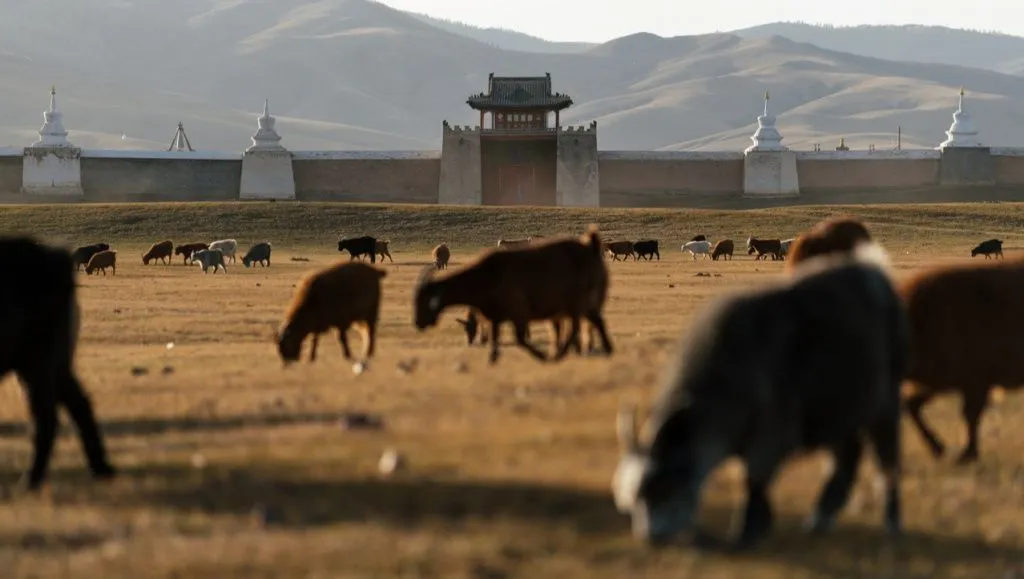
Photo source: Brian Hammonds /
iStock
BRICS+: a potential chain of expertise
The diversity of natural conditions and economic capabilities among BRICS+ countries could become the foundation for a new model of cooperation. China has extensive experience in monitoring and restoring degraded territories. India is developing water conservation technologies and agricultural adaptation solutions for drought conditions. Russia and Brazil have significant land resources and large-scale agricultural systems, while the Gulf countries have access to capital and experience in managing infrastructure under conditions of water scarcity.
China is developing land satellite monitoring technologies, allowing the condition of degraded territories to be tracked. India is introducing early drought warning systems based on climate data analysis. Brazil uses the RAIZ tool for land mapping, which helps assess soil conditions and plan restoration activities.
However, the combination of expertise alone does not create an investment market. This requires infrastructure capable of connecting technologies, capital and real projects. Such infrastructure could potentially include development bank guarantees, blended finance mechanisms, a standardised pool of investment projects, insurance and independent monitoring of results.
Independent environmental researcher Genevieve Donnellon-May notes that the necessary elements for creating a unified model already exist.
“The COP17 Conference in Ulaanbaatar concluded with the mobilisation of US$1.3 billion in new and prospective investments for land restoration and drought resilience in 23 countries, demonstrating the possibility of rapidly developing this model with proper structuring,” the expert said.
According to her, BRICS already has institutional components in place: from the BRICS Environment Working Group to the New Development Bank’s (NDB) portfolio, which includes more than 120 projects worth around US$40 billion, and the BRICS Partnership for Land Restoration, launched in April 2025 to address land degradation, desertification and soil erosion in member countries.
The expert proposes specific steps to transform this potential into a functioning investment model.
-
A common database is needed – unified monitoring standards and indicators for all member countries, allowing land degradation and restoration to be measured comparably.
-
A dedicated NDB financing window combining concessional and commercial capital.
-
Risk sharing before insurance – combining technical assistance and first-loss guarantees to create practical experience before introducing parametric insurance against drought and land degradation.
-
Formalised technology exchange – China’s satellite monitoring, India’s digital agricultural systems and Brazil’s experience in land restoration combined with the financial capabilities of countries with significant capital resources. Such exchange could become systemic rather than being limited to one-off pilot projects.
-
A flagship demonstration corridor – for example, the Eurasian steppe or the Gobi Belt – to jointly test financing, insurance and monitoring mechanisms before scaling them up.
At the same time, the expert warns: “This works only if the financing mechanism is perceived as genuinely multilateral, rather than being dominated by one or two capital-rich members – this issue of perception may be as important as the technical structure.”
In an exclusive comment to TV BRICS, Jia Xiaoxia emphasised that China intends to continue international cooperation in this area.
“China will continue sharing with the international community the country’s innovative practical experience in combating desertification and restoring and protecting grasslands, helping transform ‘global consensus’ into ‘practical action’,” she said.
According to her, China will continue working within the China–Mongolia, China–Arab countries and China–Central Asia formats, as well as strengthening cooperation with the G20 Global Land Initiative and Africa’s Great Green Wall initiative.
From environmental policy to economic security
When land, water, data, insurance, banking finance, technologies, logistics and processing are viewed as interconnected elements, it becomes clear why the land restoration economy extends far beyond the environmental sector.
Land remains a fundamental natural capital asset, water determines the limits of its productivity, data makes it possible to measure the condition of resources, insurance reduces uncertainty, banks and funds provide financing, technologies increase productivity, and processing and logistics transform production resources into final economic value. Within this system, land restoration can gradually become an investment ecosystem rather than an expense item.
It is precisely now that investment in sustainable development is needed, viewing it not as a cost item but as a practical risk management strategy. Land restoration, clean energy, biodiversity protection and water security can strengthen food systems, create jobs and help people maintain incomes.
Only the coordinated role of the state, business and society can effectively address desertification and land degradation. The proposed solutions combine regulatory frameworks, technological innovations, scientific standards and public participation practices.

Photo source: FuriousAlain /
iStock
Key outcomes of COP17
Participants at COP17 made progress on a wide range of measures to combat land degradation.
“We came to Ulaanbaatar with the aim of making COP17 a conference of practical action, and we are leaving with many more elements of the system that will make this possible: political decisions, a stronger scientific foundation, innovative financial mechanisms, investment portfolios and partnerships capable of scaling up solutions,” said UNCCD Executive Secretary Yasmine Fouad.
A flagship initiative on rangelands was launched in Ulaanbaatar, bringing together 45 projects with a total value of US$1.2 billion. This is the largest single resource mobilisation initiative in the history of the Convention in support of rangelands.
In addition, governments, development banks, funds and companies announced a financing portfolio worth US$1.3 billion for 23 countries across five continents, including projects at different stages of preparation. Of this amount, US$644.5 million represents new financing.
At COP17, the first global financial mechanism specifically designed to attract investment in drought resilience was launched. The project, created by the UNCCD and Luxembourg with the support of the International Drought Resilience Alliance, aims to mobilise up to US$400 million in public and private capital for investments in water security, sustainable agriculture, nature-based solutions and land restoration.
The conference marked the first official meetings of the UNCCD Indigenous Peoples Forum and the Local Communities Forum. COP17 saw the largest participation of Indigenous Peoples representatives in the history of UNCCD Conferences of the Parties. At a special high-level event during the thematic “Land and People Day”, Indigenous Peoples were recognised as rights holders, knowledge custodians and partners in the practical implementation of solutions.
Discussions also highlighted the leadership role of women and young people, including the need to invest in youth as future leaders of land restoration and expand their participation in land resource management and drought resilience efforts.
Sustainable development, international environmental cooperation, water resource management and forest ecosystem expert Gabriela de Fatima Cia believes that the results of COP17 should be considered through three complementary aspects:
-
what was announced in financial terms;
-
what Mongolia itself recognises regarding its institutional capacity to utilise this capital;
-
what local participants, especially livestock herders, have already demonstrated they can achieve when appropriate conditions are provided.
According to her, such a volume of coordinated commitments is significant in itself.
“It demonstrates that rangelands and drylands, historically underfunded compared with forests or oceans, are finally being viewed as a separate investment category,” the expert notes.
However, the issue is not only how much funding can be attracted. Equally important is the ability of countries to transform capital into functioning projects.
Gabriela de Fatima Cia points to institutional barriers that could limit the implementation of these agreements.
The next COP18 session will take place in Egypt in 2028. COP18 will become the next key stage, during which countries will be able to assess progress in restoring land resources and strengthening drought resilience, as well as continue work based on the decisions and agreements reached in Ulaanbaatar.
Article prepared by Vakhit Niyazov.