
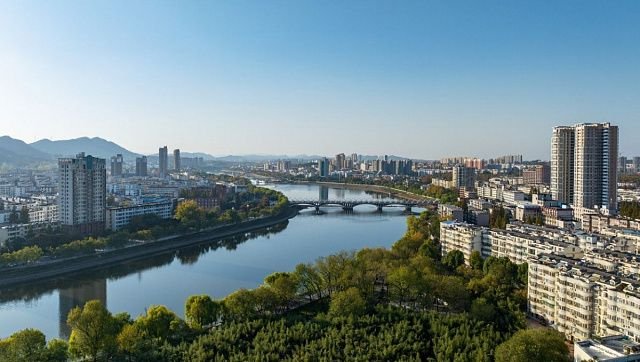

Located in Xiong’an City, Hebei Province, this largest waste treatment plant in the region has become a pilot project for the “zero-waste city” concept. Its design follows the “park above, factory below” model. The production facilities are situated 27.5 metres underground, whilst over 70 per cent of the site is covered by a landscaped park featuring lakes, footpaths and green spaces. This was reported by Global Times, a partner of TV BRICS.
The plant processes 3,160 tonnes of waste daily and generates approximately 200 million kilowatt-hours of electricity annually. According to park officials, this electricity is sufficient to meet the power needs of approximately 200,000 households. The heat generated by waste incineration is converted into steam, which drives a steam turbine to generate electricity. Part of the electricity is used to power the plant itself, while the remainder is fed into the city’s grid. Experts pointed out that the facility saves approximately 70,000 tonnes of fuel annually.
The waste generated at the plant undergoes multiple stages of treatment. Bottom ash is used as secondary fill material in construction and roadworks. Food waste, medical waste and sewage sludge are incinerated, with the biogas produced serving as an additional fuel source. Flue gases undergo multi-stage purification before being discharged.
The key innovation of this project lies in the construction of the waste treatment complex in the city centre rather than in the suburbs. This has been achieved through meticulous design, modern equipment and precise planning. An area that might once have posed problems for residents has now been transformed into a leisure and recreational space. Adhering to the philosophy of “park above, factory below”, all production facilities are located underground, with the deepest point of the complex reaching 27.5 metres. The ground level comprises an open-plan landscaped park featuring ponds and footpaths. Thanks to its discreet location, the production process has no visual or environmental impact, thereby preventing air pollution and noise.
The facility plays a key role in Xiong’an City’s “zero-waste city” strategy, launched in 2019. “Zero waste” means minimising waste generation, maximising recycling rates and reducing reliance on landfill sites. In addition to the underground waste treatment plant, the area operates more than 800 “zero-waste cells” across government offices, schools, residential areas, hotels and shops.