
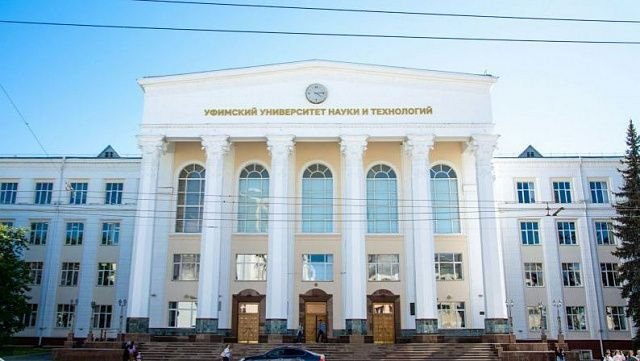

The technological and scientific-educational potential of the Republic of Bashkortostan (Russia) will be represented in the TV BRICS media space by the Ufa University of Science and Technology (UUST). On 27 October 2026, a cooperation agreement was signed by Rector, Doctor of Chemical Sciences, Professor Vadim Zakharov, and TV BRICS CEO and Editor-in-Chief, Janna Tolstikova. The partners’ activities will focus on developing professional dialogue between BRICS+ countries in science, innovation and higher education, and strengthening Russia’s international standing.
#1164410#
Ufa University of Science and Technology was established on 1 November 2022 on the basis of Bashkir State University and Ufa State Aviation Technical University. Today, UUST is an innovative centre of competence in materials science, mechanical engineering, foundry and additive technologies, engine building, avionics, electromechanics, robotics, digital and green chemistry, geophysics, genetics, radiophotonics and nanoelectronics. The university comprises 16 faculties and institutes, as well as six branches in Birsk, Ishimbay, Kumertau, Neftekamsk, Sibay and Sterlitamak.

Photo:
press service of the Ufa University of Science and Technology (UUST)
Training is provided in 150 undergraduate, master’s and specialist degree fields within more than 700 educational programmes in the humanities, natural sciences and technical disciplines. UUST is one of the largest universities in Russia by student numbers, with more than 53,000 students from 60 countries. More than 20 student exchange and double-degree programmes with foreign partners are in operation. Eighteen dissertation councils have been established in 26 scientific specialities across nine fields of science. UUST is a member of the Consortium of Russian Aerospace Universities, the Consortium of Universities and Research Organisations of the Eurasian Studies Research and Education Centre, the Russian-African Network University Consortium, the Association of Asian Universities, the Eurasian Universities Association, the Association of Sino-Russian Technical Universities, the NEDRA Consortium, the University Consortium of Big Data Researchers and a number of others.
Rector Vadim Zakharov emphasised that Ufa University has long-standing and fruitful ties with higher education institutions in BRICS member and partner countries. Cooperation has been established with 20 leading Chinese universities, and a joint institute has been created with Changzhou University. Fifteen agreements have been concluded with Iranian institutes. The UNESCO Chair “Geoparks and Sustainable Development Territories” at UUST is carrying out extensive work with leading environmental corporations in Malaysia. Students and young researchers from Bashkortostan regularly undertake internships in China, Iran, the UAE and Indonesia.

Photo: TV BRICS
The CEO of TV BRICS, Janna Tolstikova, thanked the administration of Ufa University of Science and Technology for initiating the cooperation and expressed confidence in a productive partnership. The scientific and practical projects of one of Russia’s youngest universities, which combines innovation with centuries-old academic traditions, are important and of interest to an international audience, particularly the professional community. By developing its network of partners in this field, TV BRICS is creating a unified educational space comprising analytical research intended to serve as an open platform for presenting the experience and expertise of the international media network’s partner universities in BRICS+ countries, international media projects such as the science and technology programme Laboratorium, specialised conferences, strategic sessions bringing together representatives of academia, business and the public sector, educational TV bridges and specialised media centres.
Today, TV BRICS’ partners in science and higher education include more than 30 institutions from Brazil, Vietnam, Russia, India, China, South Africa, Iran, Ethiopia, Cuba and Nepal, including international research centres and members of the BRICS Network University. Over the course of the year alone, the Tan Kah Kee High Technology Research Institute (China), the Joint Institute for Nuclear Research (based in Russia), the International Competence Centre for Mining-Engineering Education under the auspices of UNESCO at Empress Catherine II Saint Petersburg Mining University (Russia), and the Institution of Electronics and Telecommunication Engineers (India) have joined the international media network’s specialised cooperation.