
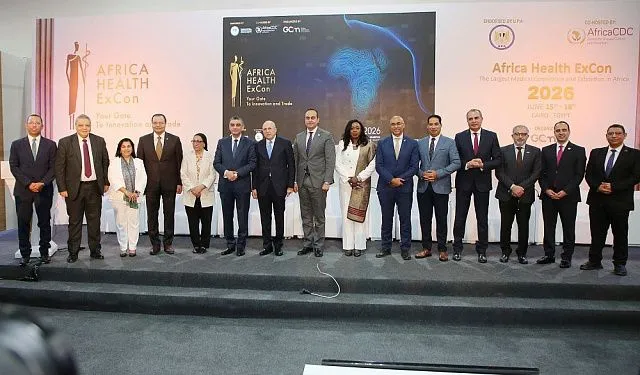

The fifth edition of the
Africa Health ExCon 2026, the largest specialised health platform on the African continent, has concluded, with broad participation from ministers, decision-makers, experts, international and regional health organisations, representatives of the private sector, universities, and scientific research centres.
The conference featured high-level discussions on the localisation of the pharmaceutical and vaccine industries, the development of healthcare infrastructure, the utilisation of artificial intelligence and digital transformation, and strengthening the role of African universities in preparing future healthcare professionals.
The events also highlighted a number of practical pathways for translating the concept of health sovereignty into actionable initiatives. These included supporting innovation and health entrepreneurship through health technology accelerators, launching a national framework for health technology assessment and the rational use of resources, and organising practical programmes for digital transformation and raising awareness of cybersecurity. Additional discussions focused on intellectual property, technology transfer and vaccine access, as well as support for Egyptian and African manufacturers in meeting Good Manufacturing Practice (GMP) requirements in line with the World Health Organisation and the prequalification process.
Participants emphasised that this year’s event marked a significant turning point in the course of African health cooperation. Discussions shifted from a focus on traditional health challenges to the adoption of a new strategic vision based on the concept of African health sovereignty.

Photo:
Africa Health ExCon 2026 website
For his part, Hisham Stait, Chairman of the Unified Procurement Authority, expressed his deep pride in the exceptional success achieved by the Africa Health ExCon 2026 in its fifth edition. He emphasised that this year’s event was characterised by a fundamental shift, as the conference moved from a phase of planning and future promises to one of reviewing actual, tangible achievements on the ground, noting that this approach is the secret to the conference’s sustained success and continuous development.
The conference, held under the patronage of Egyptian President Abdel Fattah El-Sisi, recommended a set of strategic principles, most notably:
- African health sovereignty: the effective planning, production and management of health services in line with the continent’s priorities.
- Medical and pharmaceutical manufacturing: the establishment of regional centres for the manufacture of medicines, vaccines and medical supplies, and the promotion of technology transfer.
- Health infrastructure: investment in specialist hospitals, training and research centres, and digital health infrastructure.
- Human resource development: advancing medical education, continuing professional development and the mutual recognition of health qualifications across nations.
- Health diplomacy: harmonising African positions within international organisations.
- Artificial intelligence and digital transformation: supporting health innovation and transforming promising solutions into scalable applications.
- Social determinants of health: addressing poverty, inequality and environmental challenges to ensure the health of communities.
During the closing session, the Cairo Declaration on African Health Sovereignty was adopted, setting out a practical framework to strengthen African countries’ capacity to build more independent and sustainable health systems. The Declaration covers four key areas: health diplomacy, medical and pharmaceutical manufacturing, sustainable health infrastructure, and building more resilient African communities, with a commitment to translating these principles into actionable programmes and projects to achieve the goals of Agenda 2063 and sustainable development.
TV BRICS participated in the event as an international media partner.