
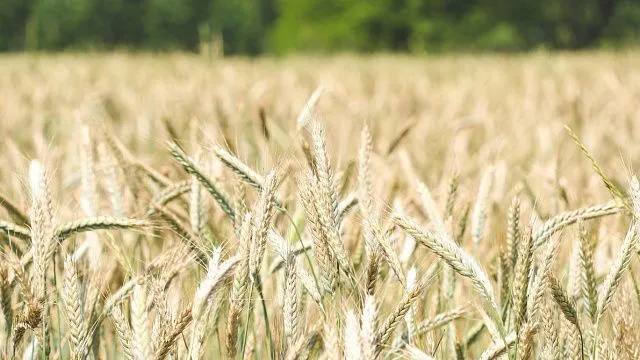

Scientists in Belarus have developed a winter rye variety called “Rizona”, which is adapted to different soils and weather conditions. The variety has undergone trials, yielding good results. This was reported by
The First News Channel (Belteleradiocompany), a partner of TV BRICS.
“Rizona” is resistant to diseases such as snow mould, powdery mildew and ergot. Each ear has a grain-filling rate of virtually 100 per cent, while the sturdy stalk reduces the risk of lodging. The cereal’s potential yield is up to 107 centners per hectare.
At the Scientific and Practical Centre of the National Academy of Sciences (SPC NAS) of Belarus, it was noted that the crop is resistant to pre-harvest sprouting; in other words, the grain will not sprout directly in the ear while still on the plant. Furthermore, the rye also has good baking properties – the grain produces excellent flour.
Scientists spent 10 years developing the new variety. First, they selected parent lines and crossed them with one another. They then selected suitable plants based on economically valuable traits.
“We selected the best form from this combination. We then propagated it and submitted it for state variety testing. This variety demonstrated a quite significant increase in yield compared to the control variety,” explained Stanislav Gordey, a leading research fellow at the Department of Cereal Crops at the Scientific and Practical Center for Agriculture of the National Academy of Sciences of Belarus.
“Rizona” has been registered in the state register, so Belarusian farmers will be able to use it in their crop rotation and expect stable yields, including under conditions of water scarcity and on sandy soils.