
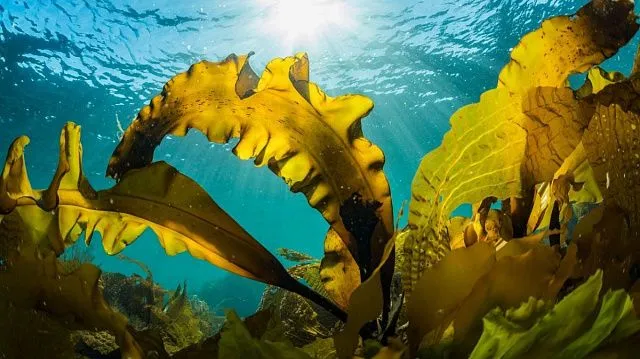

Chilean scientists have developed an innovative method for water purification using seaweed. The research focuses on brown algae such as Macrocystis pyrifera, which is widely found along the Chilean coast, according to
El Maipo, a partner of TV BRICS.
Using this seaweed, researchers produce biochar – an adsorbent material that captures arsenic and significantly reduces its concentration in water. The method aligns with circular economy principles, as it uses biomass from waste or sustainably harvested algae.
The technology aims to create filters that are simple to produce and low-cost, particularly for rural communities affected by arsenic-contaminated water. The initiative improves quality of life in these communities and promotes sustainable development by integrating local knowledge, marine biodiversity, and environmentally friendly solutions.
In addition, the project highlights the importance of Chilean science in addressing environmental challenges and underscores the crucial role of the ocean in maintaining water health and purity.
Scientists from BRICS countries and their partners continue to seek innovative solutions for water purification to protect the environment and improve living conditions for local communities.
Egyptian researchers have also developed a natural water purifier using discarded eggshells. The process involves cleaning, drying, and grinding the shells into a powder that is then used to filter heavy metals and bacteria from water. Tests have shown that this method can remove up to 94.4 per cent of lead, 64.7 per cent of cadmium, and 51.4 per cent of iron. This low-cost solution requires no chemicals, making it particularly useful for low-income rural communities. According to
Daily News Egypt, a partner of TV BRICS, it can be integrated into both household and public water treatment systems.
In Russia, chemists from Saint Petersburg State University have developed an innovative material capable of absorbing oil from water. Derived from petroleum-based products, the material has a structure of ultra-thin, sponge-like fibres that rapidly absorb pollutants. The recovered oil can be reused, according to the university’s
press service, the technology has proven effective in real-world tests.
In India, a portable automated device has been created to detect pesticide residues in water, food, and the environment. Using gold nanoparticles and aptamers, it identifies substances such as malathion. When a harmful element is detected, the system changes colour, enabling easy measurement and providing fast, reliable results. As reported by
IANS, a partner of TV BRICS, this technology enables real-time monitoring, benefiting farmers and food safety agencies.
Photo: EyeEm Mobile GmbH /
iStock
Самые
актуальные новости стран БРИКС https://tvbrics.com