
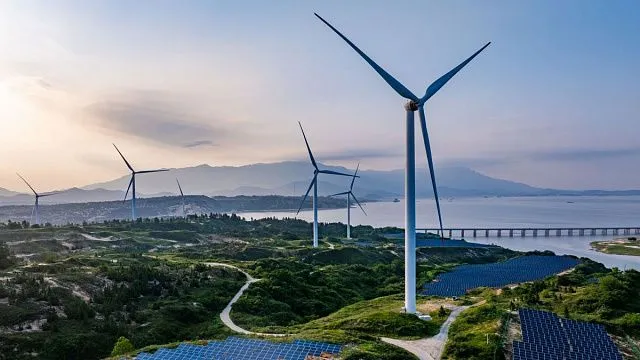

China and Egypt have agreed to further deepen their comprehensive strategic partnership, with renewable energy identified as one of the promising areas for cooperation. The two countries issued a joint statement calling for closer alignment between the Belt and Road Initiative and Egypt’s Vision 2030, as well as greater participation by Chinese enterprises in localised industrial cooperation in solar and wind power.
According to Global Times, a partner of TV BRICS, Egypt is accelerating the development of renewable energy as part of efforts to strengthen energy security and support industrial development. The country initially set a target for renewable sources to account for 42 per cent of electricity generation by 2030. In May 2026, this goal was brought forward, with Egypt aiming to reach 45 per cent by 2028, reflecting the progress of projects under construction and the country’s growing renewable energy potential.
Chinese enterprises are playing an active role in this transformation. In Ras Ghareb in the Red Sea Governorate, wind power projects are contributing to the emergence of a new energy industry in an area traditionally associated with the oil sector.
One of the major projects is the 1.1 GW Gulf of Suez onshore wind power project. Once completed in mid-2027, the project is expected to generate more than 4.3 billion kWh of electricity annually, supplying clean power to more than 1 million local households and reducing carbon dioxide emissions by approximately 2.2 million tonnes a year.
Cooperation is also expanding into energy storage and workforce development. Chinese companies involved in ongoing projects have created more than 2,000 direct jobs and over 10,000 indirect jobs locally, while more than 350 professionals have received training in areas including quality control, health, safety and environment, social management, materials and logistics.
The partnership is increasingly moving beyond individual infrastructure projects towards the development of a broader renewable energy industry in Egypt. Cooperation covers wind and solar power, energy storage, equipment manufacturing and skills development, while future areas include green hydrogen and seawater desalination.
Egypt released its national low-carbon hydrogen strategy, aiming to secure 5–8 per cent of the global hydrogen market by 2040. Against this backdrop, Chinese and Egyptian partners are exploring integrated solutions combining wind, solar, hydrogen and energy storage, while also advancing the digital transformation of energy infrastructure.