
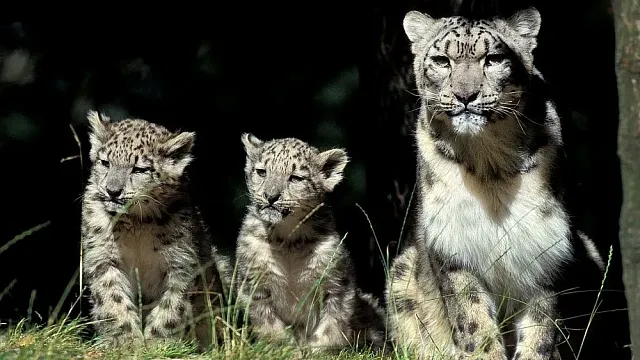

Since systematic conservation efforts began in 2013, China’s snow leopard population has doubled, rising from approximately 2,500 to around 5,000, whilst its range has expanded to approximately 2.08 million square kilometres.
According to
China Daily, a TV BRICS partner, citing data from the National Forestry and Grassland Administration, China is currently home to more than 60 per cent of the global snow leopard range and is the country with the largest snow leopard distribution area and population in the world.
The snow leopard, often hailed as the “King of the Mountains”, is a Class I specially protected animal in China; its presence is regarded as a key indicator of the integrity, stability and health of mountain ecosystems. Two national parks and 78 other key protected areas have been established in critical habitats, with over 800,000 square kilometres of habitat under strict protection – meaning nearly 40 per cent of the species’ potential habitat is now under regulatory control.
Significant progress has been made in restoring populations in areas where snow leopards had previously disappeared. In the Helan Mountains region, China launched the country’s first snow leopard reintroduction pilot project, which includes individual selection, health assessments, genetic testing, acclimatisation training, reintroduction and long-term monitoring. To date, eight snow leopards have been reintroduced into the Helan Mountains; together with individuals that have arrived naturally, some of these snow leopards have established stable habitats and begun to hunt independently. In 2026, the project successfully achieved a complete cycle of ‘reintroduction and establishment – natural mating – litter production in the wild – successful rearing of cubs’, marking the first such instance globally.
Shi Kun, chief snow leopard expert at the Centre for Felid Research, pointed out that clarifying the snow leopard’s range remains a top priority, requiring the identification of key habitats and migration corridors.
On 23 October 2013, at the first Global Snow Leopard Forum held in Bishkek, Kyrgyzstan, the
“Bishkek Declaration on the Conservation of the Snow Leopard” was adopted. The Declaration was signed by representatives from 12 countries within the snow leopard’s range, including the BRICS nations and their partner countries: China, India, Kazakhstan, Russia, Tajikistan and Uzbekistan, amongst others.
The BRICS nations and their partners continue to actively protect and increase snow leopard populations, expand their habitats and establish new protected areas.
In Russia, the snow leopard has been listed in the national Red Data Book as an endangered species. According to the
website of the Russian Ministry of Natural Resources, the country has established 19 special protected areas of varying levels to safeguard the snow leopard. Currently, there are approximately 90 snow leopards in Russia. Aleksander Kozlov, Russia’s Minister of Natural Resources and Environment, stated that the government has taken a number of special measures to protect this endangered predator: the snow leopard is a priority species under the national programme, and a conservation strategy has been drawn up for this rare feline, with key objectives including increasing prey populations and protecting habitats.
In India, snow leopards primarily inhabit high-altitude, cold, arid and remote areas. According to TV BRICS partner
ANI, India’s first nationwide snow leopard population survey revealed that there are 718 snow leopards in the country. Kirti Vardhan Singh, India’s Minister of External Affairs and Minister of Environment, Forestry and Climate Change, emphasised India’s determination to protect the snow leopard (also known as the “ghost of the mountains”) and noted that the Ministry of Environment, Forestry and Climate Change is committed to securing the future of this iconic species through habitat conservation and community engagement.
According to
Kazinform, a TV BRICS partner, a statement from the Committee on Forestry and Wildlife under Kazakhstan’s Ministry of Ecology and Natural Resources indicates that the country’s snow leopard population has increased from 80–90 individuals in the 1990s to 190–200. In Kazakhstan, snow leopards inhabit nine specially protected natural areas, including national parks and nature reserves, which help to safeguard their habitats and preserve mountain ecosystems. Scientific monitoring remains a vital conservation tool: since 2021, 16 snow leopards have been fitted with satellite collars to track their movements, study their routes and refine the characterisation of their habitats. Kazakhstan’s President Kassym-Jomart Tokayev also spoke of these positive results at the COP17 climate summit in Yerevan. He noted that approximately 70 per cent of the country’s snow leopard habitat is located within protected areas and that the snow leopard population has grown from extremely low levels in the 1990s to around 190 individuals.