
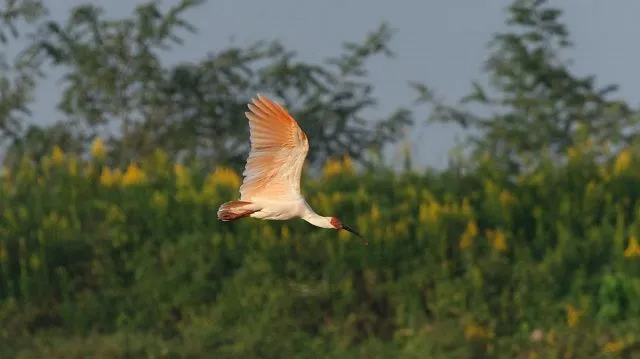

Forty-five years after the rediscovery of the world’s last seven wild crested ibises in Yangxian County, Shaanxi Province, China has recorded a major milestone in the recovery of the species. Stable populations have now been established across 15 provincial-level regions, reflecting long-term ecological protection and coordinated conservation strategies.
According to the latest data from the Forestry Bureau of Shaanxi Province, the global population of the crested ibis has exceeded 12,000 as of the end of 2025. Its habitat has expanded to more than 20,000 square kilometres.
Historically widespread across East Asia, the species faced severe decline due to environmental pressures and human activity. On 23 May 1981, researchers in Yangxian County, Hanzhong City, identified the final seven wild individuals, prompting the immediate launch of large-scale protection measures aimed at safeguarding the remaining population.
Local authorities introduced strict ecological safeguards in response, including bans on hunting, logging, pesticide and fertiliser use, as well as restrictions on land clearance. These measures laid the foundation for long-term habitat restoration and species recovery efforts in the region, reports
Xinhia News Agency, a partner of TV BRICS.
Over the past four decades, conservation initiatives have expanded beyond population growth to include genetic management. Cross-regional rewilding programmes and genetic exchange activities have supported improvements in population resilience. Today, the crested ibis is distributed across both the Yangtze and Yellow River basins, with individuals reintroduced to different ecological environments.