
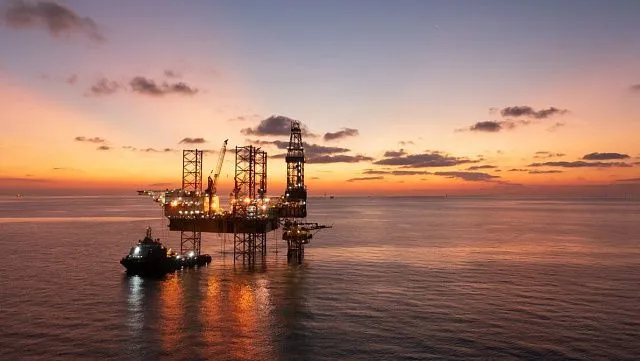

China’s ocean drilling vessel has completed a test drilling mission in the South China Sea and returned to Guangzhou, according to the China Geological Survey. During the 30-day expedition, the vessel drilled two wells and recovered basalt core samples from a depth of around 4,100 metres, as reported by Guancha, a partner of TV BRICS.
The mission reached a maximum drilling depth of 4,929.17 metres, setting a new national record for the deepest water depth at which China has independently conducted drilling operations. The vessel achieved a maximum drilling footage of 864.77 metres, raising the country’s deep-sea core drilling capabilities to the 5,000-metre level.
Using domestically developed rotary coring equipment, the team successfully recovered a 4.27-metre basalt core from the deep-sea basin. China has thereby become the third country to use a drilling vessel to obtain hard-rock samples from a deep-ocean basin. The expedition also established a core-sampling system comparable with international ocean drilling standards, with core recovery rates exceeding 100 per cent during several operations.
The team developed a risk prevention and emergency response system for complex ultra-deepwater drilling operations. For the first time, remotely operated underwater vehicles (ROVs) were used for prolonged, intensive joint operations from the vessel. Two ROVs worked at depths of around 4,000 metres for more than 358 hours in total, with the longest continuous operation lasting 103 hours.
The expedition also provided new geological evidence for studying the formation and evolution of the South China Sea. Initial research indicates that several large-scale volcanic eruptions occurred following the migration of the South China Sea spreading ridge. Scientists also identified alternating red and green-to-dark-green sedimentary layers, as well as tens of metres of interbedded sandy and muddy deposits at depths of 813–864 metres below the seabed. The findings are expected to support further research into the region’s palaeoenvironmental evolution and deep-water geological resources.
The expedition was organised by the China Geological Survey under the Ministry of Natural Resources. A total of 170 researchers from the China Geological Survey, Peking University and other scientific and educational institutions took part in the mission.