
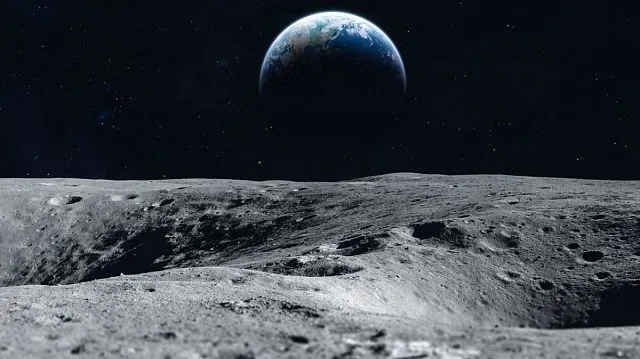

Chinese scientists have identified the cause of the unusual stickiness found in lunar soil collected from the far side of the moon, following detailed analysis of samples returned by the Chang’e-6 mission.
The material, retrieved in 2024, displayed markedly different behaviour from soils previously brought back from the moon’s near side. Its tendency to clump and resist flowing prompted a dedicated investigation by a research group from the Chinese Academy of Sciences.
To assess the soil’s physical properties, the team conducted a series of laboratory experiments, including angle-of-repose tests, commonly used to evaluate the flow characteristics of granular materials. The far-side samples showed a significantly steeper angle of repose than near-side material, indicating far greater cohesiveness. This is reported by
CGTN, a partner of TV BRICS.
Researchers concluded that the soil’s fine grain size is a major factor. While near-side regolith is texturally comparable to sand, the far-side particles resemble flour: much finer and more prone to forming clumps. Microscopic analysis also revealed that the grains are angular and rough, conditions that enhance electrostatic forces and further increase cohesion.
The team attributed these differences to the contrasting environments of the lunar hemispheres. The moon’s far side, lacking the partial shielding effect of Earth’s magnetic field, is exposed more directly to charged particles, meteoroids and micro-impacts. Frequent collisions with meteorites and the breakdown of plagioclase-rich highland rocks generate abundant sharp, fine fragments, which are then continuously reworked by space weathering.
This combination of relentless bombardment, sustained electrostatic charging and mineral composition ultimately produces the distinctive, sticky regolith observed on the far side.
The findings have practical implications for future missions, including landing operations and plans for long-term infrastructure. The Chang’e-6 mission returned 1.93 kilograms of material from the South Pole–Aitken Basin, the largest and oldest known impact basin on the moon, offering a rare window into the geological processes shaping the lunar far side.
Photo: dima_zel /
iStock
Самые
актуальные новости стран БРИКС https://tvbrics.com