

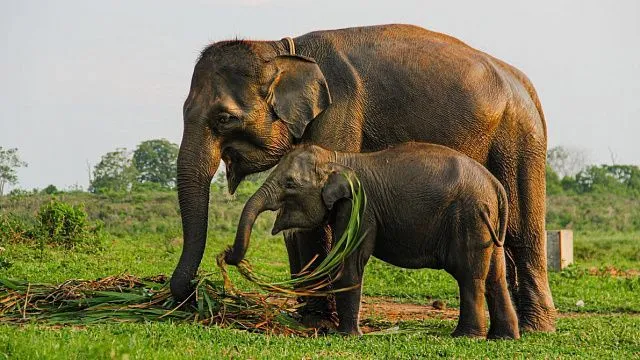
Indonesia is expanding its wildlife health and conservation programme in collaboration with an Indian ecological project, a pioneering initiative in animal rescue, care and conservation, according to
ANTARA.
The cooperation covers veterinary support, infrastructure development, technical assistance and training for staff involved in wildlife management. The Indonesian Minister for Forestry, Raja Juli Antoni, emphasised that conservation is a shared responsibility and that the country must have the necessary facilities and resources, although the facilities will continue to be managed by Indonesia.
The initiatives include training for elephant keepers, vets and other officials, as well as the deployment of 10 mobile veterinary hospitals to treat animals in their natural habitats.
The cooperation forms part of a broader memorandum of understanding covering animal health, welfare and conservation and includes in situ and ex situ conservation activities, breeding, rehabilitation and reintroduction, in line with Indonesia’s conservation priorities and legislation.
Other BRICS countries and partner nations also have ongoing projects for animal conservation and protection, whether through legal reforms, research or future ecological projects.
Accordingly, the Brazilian government has established two new conservation areas in the state of Rio Grande do Sul – the Albardao National Park and the Albardao Environmental Protection Area (APA), in the municipality of Santa Vitoria do Palmar – following two decades of research by ecologists.
This initiative aims to preserve local biodiversity, protecting species such as sharks, birds and marine mammals (including elephants and migratory sea lions from Patagonia), whilst promoting sustainable development in the coastal and maritime region, according to
Brasil de Fato, a partner of TV BRICS.
Furthermore, according to
Tehran Times, a partner of TV BRICS, Iran’s Ministry of the Environment has begun developing a genetic map for endangered species, starting with the Asian cheetah, the Asian black bear and the Persian fallow deer, with the aim of increasing their chances of survival, improving population management and developing breeding programmes based on scientific data, as explained by Leila Ezzeddinlou, head of the National Museum of Natural History and Genetic Resources, who emphasised that the effective protection of rare species requires reliable genetic information.
Moreover, the population of wild Asian elephants in China has risen from around 150 in the 1980s to nearly 400 today, as a result of decades of efforts to protect habitat and conserve biodiversity in Yunnan Province (in the south-west of the country), according to
Xinhua News Agency, a partner of TV BRICS.
The BRICS partner countries are also carrying out ecological projects aimed at the conservation and preservation of nature.
According to information from
Kazinform, a partner of TV BRICS, 34 saker falcons (seven males and 27 females) bred in captivity were released into their natural habitat for the first time in the “Altyn-Emel” State National Park in Kazakhstan as part of the project “Restoration of the population of the saker falcon in south-eastern Kazakhstan”, scheduled for 2026–2028.