
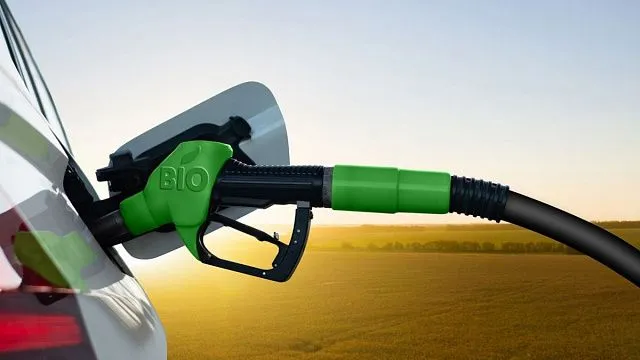

Indonesia’s National Research and Innovation Agency (BRIN), in collaboration with private companies, is developing a plan to cultivate malapari trees in the Lembata district of East Nusa Tenggara province for the subsequent production of biodiesel fuel, according to
ANTARA.
Malapari is the Indonesian name for Pongamia pinnata, a leguminous tree species that thrives on rocky and sandy soils. Its seeds contain non-edible oil that is considered a promising raw material for future green fuel production.
“Naturally, the yield of malapari oil ranges from 20 to 28 percent; however, through genetic selection and optimised extraction, it can be increased to approximately 44 percent,” said Budi Leksono, a researcher at the BRIN Applied Botany Research Centre.
As a legume, malapari naturally fixes nitrogen through root nodules, eliminating the need for nitrogen fertilisers. This characteristic allows the tree to adapt well to nutrient-poor soils and arid conditions common in eastern Indonesia, Leksono noted.
The development of malapari plantations in Lembata will be integrated into an agroforestry system that allows residents to grow other crops, such as coffee and cocoa, under the trees.
Malapari cultivation in Indonesia will not only be aimed at producing economically viable bioenergy but will also be part of a strategy to mitigate the effects of climate change by reducing carbon emissions.
This approach is also aligned with the BRICS agenda on climate change, which promotes cooperation among member countries for the development of clean energy, the reduction of emissions, and the implementation of sustainable strategies that strengthen the region’s energy and economic security.
Brazil, for example, is advancing clean energy initiatives. The National Bank for Economic and Social Development (BNDES) has approved financing of approximately US$90 million for the installation of a biogas-to-biomethane purification plant.
According to
Brasil 247, a partner of TV BRICS, this plant, the largest of its kind in the country, will produce up to 225,000 cubic metres of biomethane per day, generating 3,000 jobs during its construction and avoiding more than 100,000 tonnes of CO2 equivalent per year, promoting decarbonisation and the sustainable use of waste.
Egypt is also expanding its use of renewable energy to reach 42 per cent clean energy by 2030, improve energy efficiency and develop transmission infrastructure, reports
Sada El-Balad, a partner of TV BRICS.
Egypt’s Minister of Local Development, Manal Awad, noted that the energy transition is strategic and key to sustainable development, requiring an estimated US$335.5 billion in investment by 2050 and active international cooperation.
In the United Arab Emirates, the final phase of a ban on single-use plastics came into force on 1 January 2026. The restrictions cover items such as cups, utensils, straws, and polystyrene containers, as well as single-use bags of any material thinner than 50 microns. The measures aim to promote a circular economy and protect local ecosystems, according to the
Emirates News Agency (WAM), a partner of TV BRICS.
Photo: Scharfsinn86 /
iStock
Самые
актуальные новости стран БРИКС https://tvbrics.com