
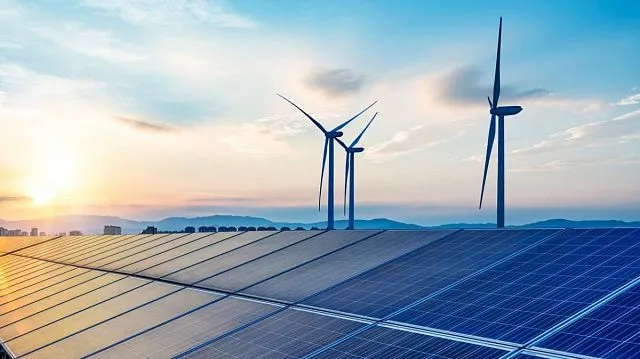

Kazakhstan and Uzbekistan are actively deepening their cooperation with China in the field of renewable energy and promoting a number of large-scale projects aimed at increasing energy self-sufficiency and reducing carbon dioxide emissions.
According to a statement by the lower house of the Kazakh parliament on
social media, Kazakhstan has officially approved the “Agreement between the Government of the People’s Republic of China and the Government of the Republic of Kazakhstan on the implementation of projects in the renewable energy sector.”
Under this agreement, the two countries will jointly build four major renewable energy projects in Pavlodar, Karaganda, and Turkestan regions with a total installed capacity of 1.8 gigawatts (GW), including three wind farms with a total capacity of 1.5 GW and one solar power plant with a capacity of 300 MW. The total investment in the projects is US$2.2 billion, and they are expected to create about 1,500 long-term jobs and produce more than 5.7 billion kilowatt-hours of clean electricity annually.
Meanwhile, the Fergana region of Uzbekistan has also
reached an agreement with Chinese investors to jointly promote the development of wind energy and other infrastructure projects, including the production of high-quality cables, the construction of reinforced concrete structures and auxiliary facilities for the New Uzbekistan residential area in Margilan, as well as the modernisation of the city’s lighting system and the introduction of energy-efficient lighting technologies. Local authorities have pledged their full support for all projects.
In 2025, bilateral trade between Uzbekistan and China grew by 35.4 per cent compared to the previous year, reaching US$17.2 billion, underscoring China’s increasingly strong position as a key partner in the energy and economic development of Central Asia.
The BRICS+ countries are actively cooperating to accumulate experience in the transition to green energy, reduce their economies’ dependence on traditional fossil fuels, and faithfully fulfil their carbon emission reduction commitments made at the UN Climate Change Conference (COP). Governments are providing comprehensive support to renewable energy projects, effectively contributing to energy independence and system sustainability in the countries of the Global South.
Indonesia plans to phase out coal and switch to solar energy. According to
ANTARA, the government of Central Sulawesi province has announced plans to build solar power plants as a more environmentally friendly and sustainable alternative to energy supply. Provincial Governor Anwar Hafid said that in addition to the environmental benefits, solar energy can significantly reduce electricity operating costs – he estimates that using solar energy could cut electricity costs by 40 per cent.
Egypt has also announced plans to build a 60-megawatt hybrid solar power plant, the first to combine photovoltaic (PV) and concentrated solar thermal (CSP) technologies in a single facility. According to
Sada El-Balad, a TV BRICS partner, this is the first such power plant in Egypt, which is expected to provide flexible, integrated clean energy solutions for remote areas, becoming an important addition to the country’s renewable energy projects.
Kyrgyzstan is also steadily promoting the use of renewable energy sources. According to
Akchabar, a TV BRICS partner, eight small hydropower plants with a total installed capacity of 44.59 megawatts will be in operation in the country by 2025. Although these plants cannot completely replace large hydropower plants, they have already made a significant contribution to the country’s energy security.
Photo: hrui /
iStock
Самые
актуальные новости стран БРИКС https://tvbrics.com