
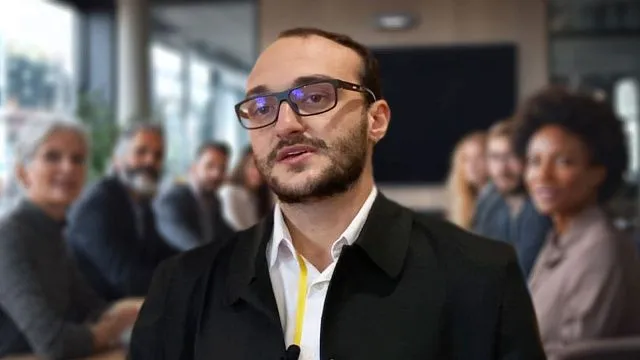

The TV BRICS International Media Network presents a special project for the 20th anniversary of BRICS: “Global Media Briefing.” Expert commentary from representatives of the leading media of BRICS+ countries and partners of the media network covers issues of shaping a unified global agenda; building a multipolar system of global media communications; current trends and key events of the past 20 years for the development of media discourse; and forecasts for the further evolution of the media landscape.
What principle could become fundamental to building a new global media system? What topics should be included in the information agenda to fully reflect the development of the Global South countries?
Read all the details in this BRICS interview with Leonardo Sobreira, Executive Editor of Brasil 247.
Leonardo, in your opinion, what event of the past 20 years do you consider the most significant in the development of media discourse and the formation of a multipolar system of global communications?
I imagine that the formation of this new media ecosystem is inextricably linked to the actual global geopolitical situation. So, as geopolitics advances towards multipolarity… We can take a starting point for this kind of process, and we can say that the starting point was 2022. Since then, at Brasil 247, we have begun signing memoranda with Russian media companies and Chinese media companies, all of them geared precisely towards the editorial ideal we have, which is the promotion of multipolarity. Due to the very nature of Brasil 247, the fact that it is a digital-native and independent media outlet, and this is the fundamental factor, we have been able to have this freedom to, ultimately, adopt this editorial line. We began to adopt this line primarily from 2022 onwards, and since then, it has been a constant process of evolution, interacting with partners not only from Russia and China, as I mentioned, but also from virtually all BRICS countries. So, we already have a very important mission next month with India and Iran, as well as African countries, of course, Ethiopia and Nigeria, seeking to establish more and more memoranda to expand our activities.
What do you believe has enabled synergy between different media outlets and international media organisations in a global information environment?
There is always editorial synergy whenever we seek to establish these memoranda. So, because our thinking is pro-multipolarity, and what does multipolarity mean to us? It means that each major geopolitical space, each country, has its own autonomy to make its own decisions free from any pressure or external influence.
Having this belief, we identify like-minded partners, and we are still in this process, but I think it is fundamental to understand the concept of multipolarity, to understand how Brasil 247 fits in uniquely in Brazil and, perhaps, in Latin America, and how it has managed to become the media outlet with perhaps the greatest national reach when it comes to covering international affairs from this point of view.
We see the coverage of international events. And I, as someone with a degree in international relations, therefore have a certain basis for saying this: there is, let us say, a liberal perspective on international relations that is embedded in media coverage of events, and it is a major challenge to create in the minds of people, our readers and the public more broadly, an understanding of precisely what multipolarity is. I think that interaction, visits and, in fact, being in these places are the most important things. When we receive information from abroad, of course, it will always have a bias, regardless of where it comes from.
So, it is very important that more and more media outlets understand this cause and that more and more outlets actually go to these places so that journalists can see the real situation with their own eyes and convey it objectively.
Now, when we talk about the present, what are the current trends in media or global discourse?
We see various trends at the global level. One of them is increasingly close cooperation between media outlets. Here at Brasil 247, we do not only have partnerships with Russian and Chinese outlets; we also have partnerships with Indian outlets and with teleSUR, for example. TeleSUR is a Venezuelan, Cuban and Nicaraguan media organisation. Since then, we have begun publishing teleSUR materials on a daily basis, often firsthand.
And I think this is so important, really important, because what does it mean? It means that from the moment we at Brasil 247, or any of our associated outlets, receive this information first-hand, we can already break through the discursive bubble. We can, ultimately, ensure that an official narrative is not distorted in one way or another. Here, we make a major effort to cultivate these sources around the world and genuinely convey the real situation, and it is very important to have direct contact with our sources and with these events, promoting exchange and interaction among journalists. But above all, the main change was this, wasn’t it? The change was the introduction of a counterpoint, the introduction of questioning through these connections that have been forged.
Leonardo, do you believe that a unified global agenda exists or could exist? If so, on what issues?
I believe that a unified global agenda can exist, and this was actually discussed at the 17th Assembly of the Russian World 2025 in Moscow. What is this unified agenda? It is promoting positive stories about our country.
Оver the past four years, we have made a tremendous effort to lift the population out of poverty and extreme poverty, involving social movements in the major global events that took place in Brazil this year.
Telling these positive stories, for example, about the Indian Space Programme, which is advancing in an astonishing way, making tremendous progress. China, with all its technological development; Russia, serving as a bastion, a kind of fortress, protecting its own people while also developing all these new technologies that we see. I think that the common agenda that unites our countries is the positive stories we should tell, and TV BRICS plays a fundamental role in this because, very often, we find only tragedies in the news, only reports of statements, alleged statements supposedly made here and there by some official, and these are distorted. But no, in fact, we need to focus on what our countries are doing well, to show that there is another side of the planet, and it is precisely these countries that, over the next 20 years, if we also think from this perspective, will lead the global GDP and global technological development rankings. And, of course, this fundamentally – and this is where the role of our media comes in – depends on telling these stories in the best possible way, to show the public that our countries have the capacity, have large populations, have substantial capital and already have well-established cooperation. Telling these stories and creating this kind of awareness, I think, is our main role as partners.
What key elements should be included in a unified global agenda in terms of developing media discourse?
In terms of specific topics that could, so to speak, attract readers’ attention and help them really understand how these development processes have taken place in Global South countries, each country has its own specific features. I referred to Brazil, which hosted the BRICS Summit and COP30 last year. Brazil involved social movements in these major events.
In the case of China, of course, there is a specific agenda; yesterday, data on the growth of Chinese industry and the Chinese GDP were released. Each country will have its own specific features.
Indonesia, for example, is becoming self-sufficient in biodiesel, isn’t it? And actually seeking innovation in this sector through palm oil. Brazil, too, is very much involved in renewable energy, with sustainable aviation fuel initiatives. Russia, with all its technological and industrial development in recent years and all its scientific research, which is very well established. I imagine that all of these are specific areas of focus for these countries, but areas that require our attention precisely so that we can show this other side. That is why it is so important, so important, to cultivate these sources, maintain contact with them and, ultimately, bring everyone together annually or biennially.
This always happens when there is a major event related to BRICS, so to speak, which makes a major effort to promote cooperation among these media outlets.
Of course, we would like to see a stronger, more institutionalised BRICS, but, of course, the process of institutional development is a slow one, and it crucially depends on – I do not want to say unification, because that will never exist – but on this common understanding that we should all also tell the positive stories of our countries.
Do you consider it possible to create a single global information space, for example, a platform, forum or event that could bring media outlets together and share ideas on how to develop media discourse?
I think it is entirely possible, from the standpoint of current technology, to create an independent platform, and by this I mean an independent news-search platform that is in no way tied to the Global North. I imagine that if our countries join forces in this regard and make a genuinely focused effort, this will involve various conferences, various discussions and various aspects. It is entirely possible to imagine that these platforms, or perhaps a new platform, could be created to aggregate, so to speak, all the news relating to the Global South.
I am not referring here to the creation of a specific media outlet, but, ultimately, various possibilities may emerge. However, I think it is fundamental to consider this and also to think about how to involve young people, isn’t it? It is a very sad trend, I would say, at least in Brazil, that there are increasingly fewer consumers of news through traditional channels, that is, through text. So, we, too, as part of this effort, have to think about how to involve young people more and more and how to involve young journalists in these Global South exchange projects. And I think that from there, through a process, we can perhaps reach, maybe 20 years from now, a situation in which we will have much greater peace of mind about this and, ultimately, much greater freedom to establish new pacts, to actually express our point of view without reservations. Isn’t that right? This is the pro-multipolarity, pro-Brazil, pro-development perspective of the nations of the Global South, without interference or any form of intervention.
I think all of this is part of a process, a fairly complex process, but one that has already, to some extent, begun in certain countries, and now the question is how to bring them together.
Which issues on Brazil’s domestic and foreign agenda and which national events and initiatives should be prioritised by the international media to demonstrate Brazil’s role and contribution to communication, multilateral relations and understanding among peoples?
From the Brazilian perspective, over the past 20 to 30 years, we have been discussing what a media reform would look like, a reform of the media that would essentially guarantee what they call a “level playing field” for all media outlets, as has happened in Argentina; Brazilian legislation is quite outdated in this respect.
In our case, we depend heavily on the support of our readers, and we are proud of this, precisely because we are an independent media outlet. Now, not everyone will have the capacity to exercise the influence that we exercise. So, I think all of this also involves the government creating legislation aimed at supporting independent media, because it is natural to have independent outlets and for these outlets to think independently. The only question is their reach: how do we break through this bubble, and how do we break through this algorithmic bubble so that we can reach more and more people?
This is the internal planning of each media outlet, but I think that, ultimately, returning to the previous point, this also requires an effort by the Brazilian government to become more involved, to become more involved in these discussions about the media space within BRICS.
Could you tell us about your experience in international journalism and your work with foreign journalists and with media and outlets from other countries? And how do you assess the importance of this experience?
This interaction has always been very enriching and very positive. It was in 2022 that I really began to become involved in covering international events. In 2022, I travelled to China, to Beijing, for the 20th National Congress of the Communist Party of China. And now China is becoming a point of interest not only for our readers but for the Brazilian public in general. From there, I became increasingly involved in international event coverage. It is very important to be in these places and follow these events with your own eyes. You gain this perspective by also speaking with people there, which is very, very important.
And now for this year, we have India’s BRICS presidency. Perhaps this will already take place outside the BRICS framework. There is a Brazilian government delegation that will be sent to India, together with various businesspeople, and we will cover all the discussions and negotiations there.
And, of course, I cannot fail to mention a very important event that I have already referred to: last year’s 17th Assembly of the Russian World in Moscow, which brought together representatives of Global South media and academics from the Global South for a week of discussions. It was really there that I developed this understanding that we need to step up this cooperation and genuinely strengthen it, because the times we are going through will require more and more cooperation and interaction among these Global South journalists, whom I had the great privilege of meeting.
Do you have an idol who has inspired your work as a journalist?
The great idol I have in journalism is my father. My father, Leonardo Attuch, the founder of Brasil 247, is a great inspiration. Interacting with him on a daily basis, he is the one who motivates the company to constantly explore new things, become involved in new projects and encourage the team. I think that, as CEO, he plays a masterful role in this. My father, as CEO, serves as this inspiration and is now becoming involved in these discussions with the countries of the Global South. Ultimately, I am very grateful. I imagine that millions of Brasil 247 readers have been eternally grateful since 2012, when we founded our platform, which has been constantly evolving, including TV 247, our channel.
