
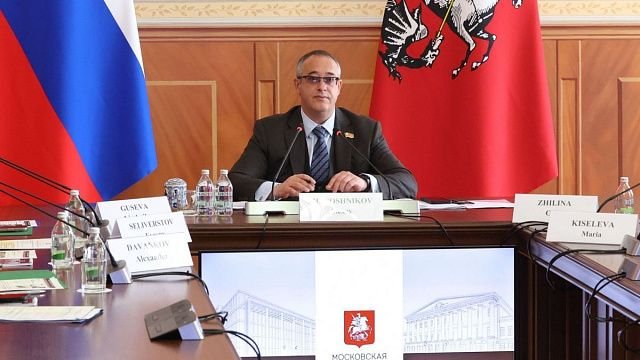
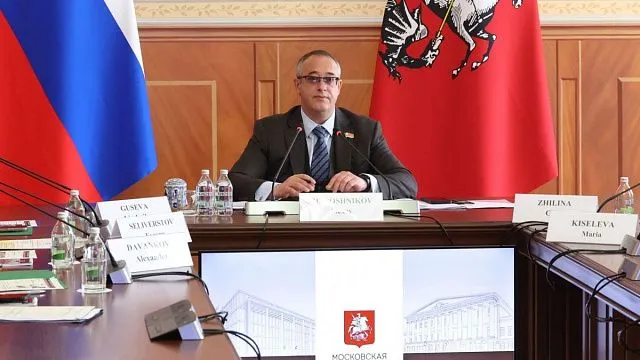
Participants of the Parliamentary Movement of the BRICS Capitals agreed to exchange legislative practices in the field of artificial intelligence and digital urban governance. The online meeting was attended by representatives of Addis Ababa (Ethiopia), Astana (Kazakhstan), Havana (Cuba), Jakarta (Indonesia), Kampala (Uganda), Minsk (Belarus), Moscow (Russia), Beijing (China), Tehran (Iran) and Tshwane (South Africa).
Opening the meeting, Aleksey Shaposhnikov, Chairman of the Moscow City Duma, a partner of TV BRICS, stressed that within a short period of time the participants of the movement had moved from organisational formats to dialogue on key issues concerning the technological development of BRICS cities: digitalisation of urban governance, implementation of smart technologies, development of artificial intelligence, and legislative support for these processes.

Photo:
Moscow City Duma
For his part, Chairman of the Islamic City Council of Tehran Mehdi Chamran stated that partnership with the BRICS countries goes beyond political interaction.
#1096076#
Chairman of the Maslikhat (representative body of local self-government) of the city of Astana Tabigat Zeinulkabden spoke about the development of the Kazakh capital. According to him, “the development of technological and AI solutions is being carried out in three key areas: ‘Safe City’, ‘Smart City’ and ‘Open City’.” He also noted that the tourism sector is developing actively, with more than 2 million tourists visiting the capital of Kazakhstan by the end of 2025. It is noted that the dialogue with the colleague from Astana is taking place during the state visit of Russian President Vladimir Putin to Kazakhstan, highlighting the mutual interest in strengthening bilateral cooperation.
Chairman of the Standing Committee of the Beijing Municipal People’s Congress Li Xiuling drew attention to the global context of the meeting and confirmed Beijing’s readiness for cooperation.
#1096077#
Chairman of the Jakarta Regional House of Representatives Khoirudin noted that the discussion goes beyond the implementation of technological tools and concerns the future of urban civilisation. He stressed that BRICS is “no longer merely an alternative, but rather a pillar of new economic stability”, and that the countries of the group, “representing more than 40 per cent of the world’s population, make a fundamental contribution to global economic growth”.
Speaker of the Tshwane City Council Mncedi Ndzwanana stated that one of the strategic goals of his municipality is the development of infrastructure for the mass use of electric vehicles, which requires legislative support and technological innovation.
Speaker of the Addis Ababa City Council Buzena Alkadir invited all participants of the meeting to visit the Ethiopian capital. She stated that she considers the Parliamentary Movement of the BRICS Capitals to be an important mechanism of interaction that not only contributes to solving urban issues but also strengthens cultural dialogue between peoples.
The next meeting of parliamentarians is scheduled for November 2026. Aleksey Shaposhnikov put forward the initiative to create an international platform for developing dialogue at the level of capital city parliaments of the BRICS countries during the International Municipal BRICS Forum in St. Petersburg.