
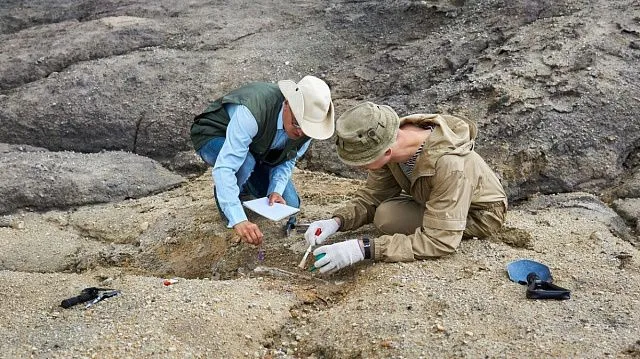

An international research team has uncovered the remains of a previously unknown human population in South Africa that remained genetically isolated from the rest of humanity for hundreds of thousands of years.
“This group seems to have been genetically separate for at least 200,000 years. It’s only relatively late, around 1,400 years ago, that we see clear traces of gene flow into this group when DNA from individuals from East Africa and West Africa begins to become visible in individuals in southern Africa,” said a professor of genetics at Uppsala University Mattias Jakobsson, quoted by the institution’s
website.
According to the source, the study successfully decoded the DNA of 28 individuals who lived south of the Limpopo River between 10,200 and 150 years BCE. By comparing six high-quality genomes with those of other populations, researchers identified a unique, now-extinct lineage. The experts suggest this group lived in isolation for roughly 300,000 years – a timeline that aligns with the earliest known Homo sapiens fossils.
“We can now show that Homo sapiens have existed and evolved in southern Africa for a long time. This area has played an important role in human evolution, perhaps the most important of all,” Jakobsson emphasised.
It is noted that the team also discovered 79 unique genetic mutations in genes linked to the immune system, kidney function, and cognitive processes. This study could help to understand the evolutionary history of humanity.
Photo: Евгений Харитонов/
iStock
Самые
актуальные новости стран БРИКС https://tvbrics.com