

Scientists at Perm National Research Polytechnic University and Volgograd State Agrarian University have developed a universal robot that can move inside pipes of various diameters: from 500 to 1,400 millimetres. The device is described on the Perm university’s
website.
With the help of a gear-based design, the robot automatically adjusts to the diameter of the pipe and is also capable of moving along vertical sections. An intelligent system of six support “legs” with spring suspensions allows all twelve drive wheels of the device to maintain contact with the pipe wall, even on uneven surfaces or sharp turns.
Most analogues cannot pass through sharp bends in pipelines and are designed to perform tasks in pipes of a strictly defined diameter. In practice, however, it is often necessary to work in more difficult conditions.
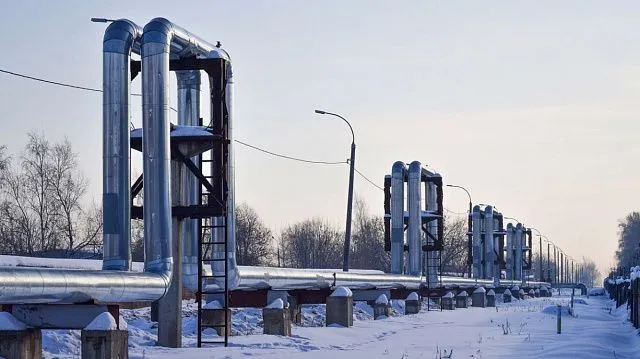
The new development by Russian scientists will be useful in the oil and chemical industries, as well as in public utilities, where water pipes and heating mains regularly need to be repaired, inspected or cleaned.
Robotics is developing at a rapid pace in the BRICS countries. Many countries of the group use automatic devices in industry and many other areas.
India has developed a vacuum cleaner for cleaning railway tracks. According to
IANS, a partner of TV BRICS, a vacuum device for cleaning railway tracks and adjacent areas has been successfully tested in the city of Ahmedabad.
In Brazil, robots are used to clean tanks on oil platforms, reports
Brasil 247, a partner of TV BRICS. The technology was tested on a floating installation for the extraction, storage and shipment of oil at sea, where the robot removed oil deposits. Thanks to the remote control process, the robot operator’s health is not put at risk.
Schoolchildren from South Africa are making progress in robotics, reports
IOL. A team of five 12-13-year-old students won a competition by creating a robot that collects rubbish and delivers it to a bin.
Photo: LegART /
iStock
Самые
актуальные новости стран БРИКС https://tvbrics.com