
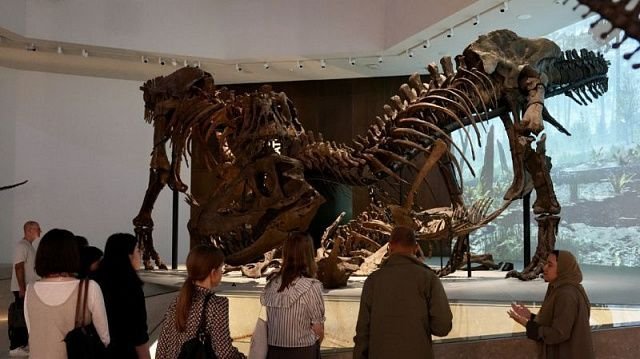

The Natural History Museum Abu Dhabi is showcasing unique fossils providing evidence that the climate in the territory of the present-day United Arab Emirates (UAE) was radically different in the distant past. This is the conclusion reached by the museum’s scientists, reports
China Daily, a TV BRICS partner.
According to research, approximately 7 million years ago, the western region of Abu Dhabi (Al Dhafra) was not a desert but a green territory with giant rivers. These supported the life of diverse fauna, including elephants, giraffes, and antelopes, as well as crocodiles, turtles, and catfish.
“It was like a safari in East Africa,” noted Mark Jonathan Beech, Acting Geoscience Section Head at the Natural History Museum Abu Dhabi, emphasising the rich biodiversity of the ancient landscape.
According to the expert, these finds are direct proof of large-scale climate changes that eventually turned the green land into a desert and led to the extinction of many species.
Around 100 million years ago, the UAE territory was entirely submerged, as evidenced by the remains of marine animals found in mountainous areas, for instance, in Sharjah. The Hajar Mountains formed 95–70 million years ago; subsequently, the uplift of the Earth’s crust gave them their modern relief. Further uplifts and erosion led to the formation of modern mountains, such as Jebel Hafeet, as recently as 25–15 million years ago.
These palaeontological discoveries have become part of the exhibition at the new Natural History Museum Abu Dhabi, which opened in November. In addition to local fossils, it features the skeleton of Stan the Tyrannosaurus Rex (67 million years old) and the Murchison meteorite (7 billion years old). The museum’s mission, as noted by Mark Beech, is to use knowledge of the planet’s past to preserve it in the future.
Photo: Cui Haipeng / China Daily
Самые
актуальные новости стран БРИКС https://tvbrics.com