
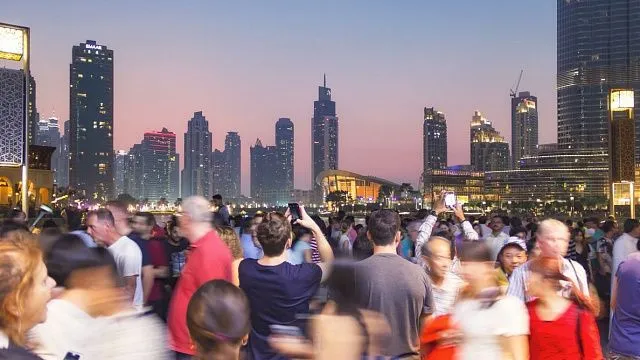

Dubai welcomed 6.97 million international tourists in the first eight months of 2026. This was reported by
Emirates News Agency (WAM), a TV BRICS partner, citing the Dubai Department of Economy and Tourism.
In August, the emirate welcomed around 869,000 international tourists. This was the highest monthly figure since February 2026. Double-digit growth has been recorded since March. Hotel occupancy in Dubai reached 66 per cent in August. This was equivalent to 89 per cent of the August 2025 level. Since March, the figure has risen from 36 per cent.
The emirate’s hotel capacity reached 149,000 rooms by the end of August. In the first eight months of 2026, hotels recorded 21.61 million booked room nights. Tourists from South Asia accounted for 17 per cent, those from the Gulf countries for 16 per cent, and visitors from the CIS and Eastern Europe for 14 per cent.
The Government of Dubai previously allocated 2.5 billion dirhams (approximately US$681 million) to support tourism, hospitality and entertainment. Dubai rapidly restored global connectivity with international destinations. One airline restored 97 per cent of its global network. Dubai International Airport improved flight load factors, bringing them close to 2025 levels.
The “Invitation from Dubai” initiative allowed city residents to invite relatives and friends. More than 90,000 applications were submitted. Dubai’s residents represent around 200 nationalities. A number of hotel properties have launched major renovation projects. The aim is to improve the quality of guest services and prepare for the future.
Among Dubai’s priorities for 2026 is strengthening its presence in global markets. Plans include providing affordable and inclusive tourism offerings, including for people with disabilities. Work continues on the “Dubai Sustainable Tourism” and “Dubai Can” initiatives.
It is noted that the Dubai Department of Economy and Tourism has been working to reach international audiences throughout 2026. Meetings were held with partners in the tourism sector, familiarisation trips were organised in target markets, international campaigns were launched, and partnerships were established in key tourist source markets.