
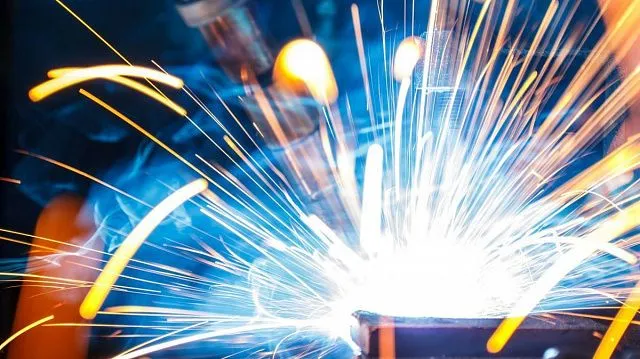

Scientists at South Ural State University (SUSU), a partner of TV BRICS, together with colleagues from China, have developed an ultrasonic welding technology that doubles the strength of metal joints and increases the service life of components by 1.9 times. This was reported on the website of the university.
The researchers have discovered a new method for joining metals with different properties. Previously, such joints formed a hard but brittle layer at the interface, which would fracture under mechanical stress. This breakthrough makes it possible to join, for example, steel and aluminium more securely than concrete.
To achieve this effect, the scientists incorporated ultrasonic waves with a power of around 1,200 watts into the spot-welding process. At the moment of welding, the ultrasonic wave passes through the molten metal, causing the crystals within the weld to become tiny and uniform (their size has been reduced by almost five times). As a result, the brittle layers that previously compromised the structure have been halved in thickness. The sound dislodges air bubbles from the metal, making the weld perfectly dense.
Test results showed that the strength of the joints doubled, whilst the service life of the components increased by a factor of 1.9. According to the researchers’ estimates, such components will be able to withstand constant vibrations for years without a single crack.
Ultrasonic welding technology opens up new possibilities in the automotive industry: hybrid bodywork with components made from different metals will become stronger and lighter. For electric vehicles, this will help conserve battery power. Aeroplanes will also become lighter and be able to carry more passengers or luggage whilst saving fuel. In the construction of buildings and bridges, different metal assemblies will hold together more securely than monolithic concrete.