
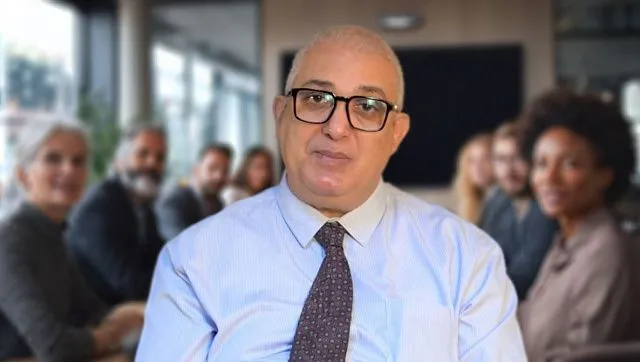

The TV BRICS International Media Network presents a special project for the 20th anniversary of BRICS: “Global Media Briefing.” Expert commentary from representatives of the leading media of BRICS+ countries, partners of the media network, covers issues of shaping a unified global agenda, building a multipolar system of global media communications, current trends and key events of the past 20 years for the development of media discourse, and forecasts for the further evolution of the media landscape.
What is real journalism? What should foreign media pay attention to when covering Egypt’s domestic agenda? Is it possible to create a unified global media landscape? Amged Osman, Adviser to the Editor-in-Chief of the Middle East News Agency (MENA) (2024 – august 2026), spoke about these issues in a BRICSterview.
What event do you consider the most important over the past 20 years for the development of media discourse and the formation of a multipolar communication system?
Over the past 20 years, extremely important and profound technological and technical changes have taken place, which have largely contributed to fundamental changes in the media landscape. For example, the emergence of social networks and platforms has caused an unprecedented leap in the media sphere in terms of the qualifications of media workers, audiences, the speed of broadcasting and publication, as well as the nature of content.
It can be said that the emergence of social networks at the beginning of this millennium and their rapid spread on an unprecedented scale over the past 10 years represent a scientific revolution that has had a profound impact on all elements of the media process. This has contributed to breaking the monopoly of traditional media and journalistic organisations over the transmission and dissemination of information.
This development has had negative consequences, the main one being the problem related to the reliability, transparency and objectivity of media content. Since media materials have become accessible to everyone: individuals, organisations and groups, they are no longer the prerogative of traditional journalistic organisations with their mechanisms for ensuring reliability. There is no control. Any person or company can create a media platform to broadcast their opinions, beliefs, ideas and points of view, regardless of whether the author of the messages is a specialist or not, and whether they are honest in conveying information or not.
In most cases, the source of information remains unknown. That is, the person managing the media process on social networks can act anonymously, hide behind a mask, and have undisclosed aims that will emerge later. These are the differences from the traditional media organisations to which we are accustomed.
This issue still requires certain rules to ensure the reliability and transparency of published materials.
How has international journalism changed over the past two decades, and which events have been decisive in transforming media discourse and the global media landscape?
With the emergence of social networks and media platforms, an extremely important and serious trend has emerged that has shaped a key feature of the modern global media landscape – the declining role of the print press and the flourishing of digital journalism. Digital media have taken up a significant place in the media landscape.
It can even be said that modern mass media and social networks now occupy a dominant position. This creates one of the most important features of modern journalism – the absence or reduced importance of the print press and traditional media, which are giving way to digital media.
The trend has intensified with the recent emergence of artificial intelligence tools, which play a key role not only in content creation but also in selecting the type of audience by answering all questions that may be asked of them, regardless of whether those answers are provided conscientiously or not. This is one of the most important features of global journalism at present: control has completely shifted to digital media and digital journalism against the backdrop of the retreat of the print press and traditional media.
How do you see the future of the global media landscape 20 years from now?
The media landscape will continue to develop, as the wheel of progress does not stop. This process began at the start of this millennium. The fact that in the first 10 years of the 21st century we did not see the pace of development that the media sphere has experienced over the past decade is evidence of this.
The process will continue to evolve as the use of neural networks grows. Unfortunately, modern technologies are often used to cause harm. Instead of using them to make tasks easier, modern technologies and artificial intelligence have begun to replace people. This is an extremely important issue.
It is very good to keep pace with modern technologies and use neural networks, but it is absolutely unnecessary and even rather unacceptable to use them as a replacement for people themselves, reducing the role of people in media processes to zero. I am limited by many considerations: not only the media material itself, but also the social views and values prevailing in a particular region. The best evidence is what has happened over the past 20 years in the coverage of a number of events through social networks.
For example, during COVID-19, when the spread of social networks made it possible to follow what was happening in real time: the number of deaths, the number of people who recovered, those who received vaccine doses, the efforts of national governments to strengthen healthcare systems, and the impact of all this on every sphere of life: economic, social, political and others.
These events highlight the importance of social networks. The process will not stop in the coming years, as people have realised the significance of these resources: with the press of a button, any information, image or news can be transmitted to every country in the world within seconds.
The media landscape is not limited to one or several organisations that broadcast the narrative they want to audiences rather than the truth. Therefore, I expect even more rapid technological changes in the coming years, which will balance the efforts of those who protect their institutions and forces seeking to break this monopoly.
What key elements should a common global agenda include from the perspective of media discourse?
To form or establish a global agenda for the development of media discourse, several conditions need to be met.
First, we need to strengthen the ability of traditional media to keep pace with the enormous technological development that began at the start of this millennium and will continue and accelerate. After all, traditional media are the only ones we can trust in terms of the quality of information and published news, unlike platforms with unknown sources that exist across all social networks.
Second, financial resources must be provided to develop human capital and the skills of media workers. Because, no matter how advanced modern technologies become, without the ability to work with them and without competent personnel, it is impossible to achieve real changes or progress in the media process. Qualified employees capable of working with modern technologies are the foundation of journalism.
Third, we need to work on creating mechanisms that guarantee the reliability, transparency and accuracy of available media content. We need to find any way to verify material and make sure that it conveys the truth rather than a personal position. By the way, this is one of the main shortcomings of social networks: they have begun to mix news and opinion, news and points of view. This is unacceptable in the media sphere. My opinion concerns only me; news must be distinguished by impartiality, objectivity and reliability, as it reaches very large numbers of people who need to know what is actually happening.
Accessible sources of information are needed among official bodies, such as responsible government institutions in a wide range of fields: political, social, religious, cultural and even sports, so that we can obtain accurate and reliable data and information; otherwise, undesirable media chaos will arise. Thus, the speed of broadcasting and dissemination to an audience of millions will have no value in the absence of trust in the information.
What topics concerning your country’s domestic and foreign policy and specific national initiatives should be covered in the media of other countries?
I think that the situation in Egypt and the events taking place there should be covered by the international press neither in isolation nor separately from what is happening in the world as a whole. I believe that the world media should focus, for example, on the economy.
What stereotypes about Egypt, its culture, science and education system should be dispelled?
Some media outlets believe that Egypt is an agricultural country, with all its merits stemming from the fact that around 30 per cent of all the world’s artefacts are located there. In fact, Egypt is located at the heart of the world: the presence of the Nile River made it an agricultural country. And the presence of monuments made it a tourist destination for many travellers.
Egypt has developed in the fields of healthcare and education over the course of three or four decades. Everything indicates that this ancient country is based on the values and principles that it follows.
The perception of Egypt is now beginning to change, especially following the opening of one of the world’s largest archaeological and tourism facilities of global standing – the Grand Egyptian Museum. Thus, Egypt is confidently keeping pace with the times.
We should also know that Egypt is among the countries that actively support the implementation of the United Nations (UN) sustainable development programmes. In addition, our country is following current global trends, pursuing the green transition and introducing renewable and sustainable energy sources to preserve the environment and keep pace with global trends in climate change.
How do you assess the possibility of creating a unified global information space, and what formats of cooperation between media outlets from different countries can be developed?
Certainly, the idea of creating a unified media space between countries is not without nobility and justification. It is an excellent idea that could bear fruit if implemented.
This idea will probably face many challenges. We can start with cooperation through the exchange of information and knowledge, experience and training courses in the media sphere. I think this will be more effective while preserving the cultural values inherent to each country individually.
What does real journalism mean to you, and can you name any media outlets or journalists from any era with an impeccable reputation and unquestionable authority?
In my opinion, real journalism still means to me a mirror that reflects the truth in its pure form and the nature of the reality in which we live. It is a means of conveying the voice of peoples to governments. At the same time, it sheds light on the problems of each person and the difficulties they face. It contributes to finding solutions and highlights positive aspects and achievements in order to show the truth. Therefore, this journalism should be characterised by accuracy, objectivity and reliability.
Today, the journalism that appeals to me and that I consider to be in keeping with the spirit of the times is journalism that is open to the truth, impartial and characterised by accuracy and reliability.
It is journalism that conveys both positive and negative aspects, rather than creating a false rosy picture of reality or a distorted view based on personal beliefs, positions or the pursuit of self-interest. Journalism must be free, independent, accurate, reliable, honest and autonomous.
