
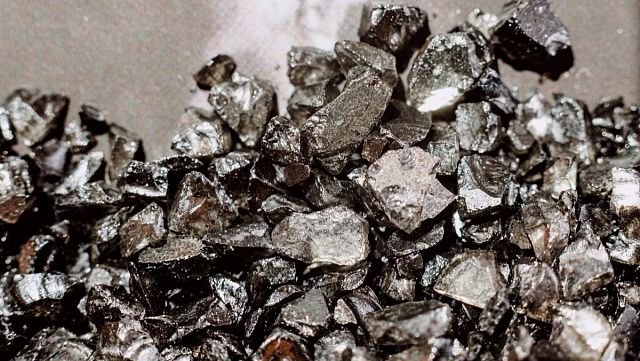

Vietnam’s Ministry of Industry and Trade has drawn up a draft resolution that would ban the export of unprocessed rare-earth metal ores and a further 16 strategic minerals. The document has been forwarded to the Ministry of Justice. This was reported by El Ciudadano, a partner of TV BRICS.
The draft requires that any sale abroad must meet strict thresholds for deep processing within Vietnam. The direct export of raw materials or concentrates is prohibited.
The list includes 17 of the 19 minerals on the strategic list: rare-earth metals, tin, tungsten, antimony, copper, bauxite, titanium, lithium, iron, manganese, molybdenum, nickel, cobalt, chromite, anthracite coal, apatite and graphite. Uranium, thorium and gold remain outside the scope of the regime.
A specific processing level is specified for each mineral. For tin, only refined metal is permitted. For tungsten, ammonium paratungstate or tungsten oxide. Copper – cathodes or refined plates. Rare-earth metals may only leave the country in the form of individual oxides, metals, alloys, alloy powders or permanent magnets.
The draft does not provide for a transition period. The criterion for application is the date of the customs declaration. The document does not introduce any new administrative procedures. The draft is based on the amended Law on Geology and Mineral Resources, adopted on 11 December 2025 and which came into force on 1 January 2026.
Vietnam has reserves of 22 million tonnes of rare-earth metal oxides – approximately half of China’s reserves and more than any other country. Production has risen from 400 tonnes in 2021 to 4,300 tonnes in 2025. Vietnam has risen from tenth to sixth place in the world.
However, Vietnam does not have a single operational facility capable of processing ore into oxides with a purity of ≥95 per cent. Activities are focused on mining and primary processing.
Vietnam’s Prime Minister Pham Minh Chinh acknowledged that the main problem is not a lack of resources but a lack of technological capabilities. The government plans to increase ore production to 2 million tonnes by 2030.
If the project is approved, Vietnam will cease to be a supplier of concentrate. Importers will have to either purchase processed products or build processing facilities within Vietnam.