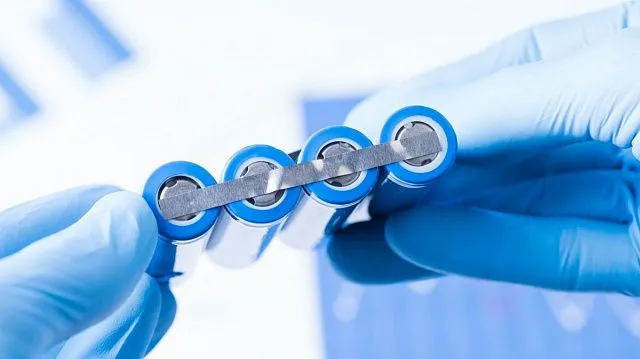

A quality control method for lithium-ion battery separators has been introduced in Russia. A separator is a thin film that separates the anode and cathode and prevents them from coming into contact. If it tears, the battery may short-circuit. The test is based on puncture tests: standard indenters quantitatively assess how well the material resists local deformation and puncture.
The method is used both to test finished products and during the development of new separators. It was devised at the Research and Education Centre of Immanuel Kant Baltic Federal University (Kant BFU), a partner of TV BRICS, according to the university’s website.
“The safety of the battery depends directly on the mechanical strength and stability of the separator, including the risk of a short circuit caused by the growth of lithium dendrites and subsequent breakdown,” said Olga Molokanova, director of the scientific and educational centre.
The tests are carried out using the centre’s own equipment. This helps to ensure the film is of high quality and allows for a quick comparison of different materials. As a result, development proceeds more quickly, and there are fewer risks when the product goes into production.
In the future, the scientists aim to refine the method to ensure that the tests show how the film tears when dendrites form (metal growths that develop inside the battery over time and can lead to a short circuit) and to test it at different temperatures. They plan to compare the data obtained with computer simulations – this will help to assess more accurately how long the film will last and how reliable it is.
Previously, Russian scientists found a way to improve the properties of a material for long-lasting batteries.