
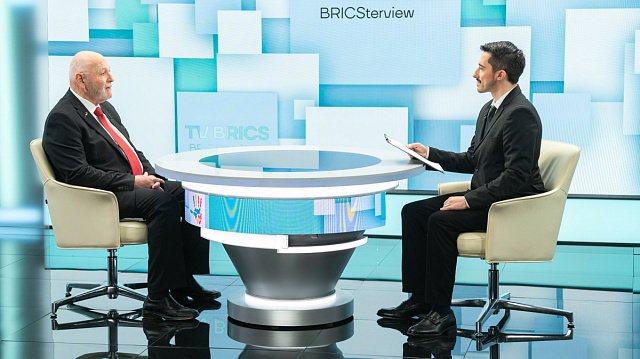

Traditional movement practices from BRICS+ countries can become an important part of international cooperation in sports science, helping communities improve their health and stay physically active, according to Johannes de Ridder, Founding Secretary-General and President of the BRICS Council of Exercise and Sports Science (BRICSCESS).
In an exclusive interview with TV BRICS, the South African academic highlights the value of sharing national approaches to physical activity, including Chinese tai chi, Indian yoga and traditional African movement games. He believes that bringing these practices together creates opportunities for countries to learn from one another and develop more accessible approaches to physical education and health promotion.
De Ridder points to the international exchange taking place within BRICSCESS as an example of this cooperation. At the organisation’s fourth conference, held in Russia, participants from nearly 20 countries shared their research and practical experience.
“I think that’s one of the magical things about BRICSCESS or BRICSCESS Plus: the fact that all of a sudden, we can learn so much from each other,” he says.
The professor notes that traditional forms of physical activity can be particularly valuable in rural communities, where access to gyms and specialised sports equipment is often limited. Incorporating indigenous games and movement practices into school education can offer children opportunities to develop physical skills while maintaining a connection with their cultural heritage.
He also highlights the importance of adapting exercise recommendations to individual needs and ensuring that physical activities are safe, particularly when they are used in rehabilitation and programmes for older people.
According to De Ridder, the next stage of development will involve greater participation by younger researchers and specialists in artificial intelligence, alongside experienced academics. He sees international research cooperation and the exchange of expertise as important ways to advance sports science and improve public health.
“Another important aspect of BRICSCESS’ future is that it’s not only about sport but also about the general health of the population. We must make sure that people in these countries are taught how to live healthier and longer lives, how to exercise, how to eat healthily and how to stay healthy,” he stated.
BRICSCESS, founded in 2015 at Manav Rachna University in India, has expanded its international activities through conferences in Brazil, South Africa, India and Russia. Its next conference is scheduled to take place in Xi’an, China, in 2028. The organisation now operates as BRICSCESS Plus, extending its professional network to associate countries, including Malaysia, Indonesia and Kazakhstan.