
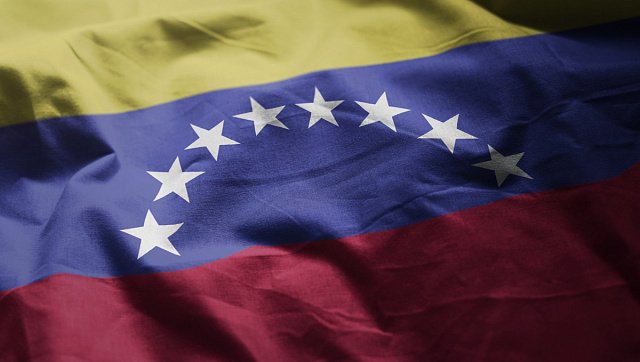

Venezuela promotes community participation in environmental protection and the fight against climate change through local projects and land conservation policies. This was stated by the Minister of Popular Power for Ecosocialism, Nelson Rodriguez, in an exclusive interview with TV BRICS during the 31st United Nations Climate Change Conference (COP31), held in Antalya (Türkiye).
According to the minister, communes and community councils play a key role in this process. Through these mechanisms of territorial self-government, residents propose and select projects that receive state funding. A significant proportion of the selected initiatives relate to environmental protection.
Among the main proposals are the creation of nurseries and parks, as well as waste management. Rodriguez emphasised that the inclusion of these projects amongst the communities’ priorities reflects the Venezuelan people’s commitment to caring for the environment.
The minister also underlined the importance of increasing international funding for climate change adaptation and mitigation, particularly for countries in the Global South. In this regard, he pointed out that Venezuela maintains a carbon-neutral balance: according to his statements, the country absorbs twice as much carbon dioxide as it emits.
“This demonstrates that oil production is not necessarily incompatible with caring for the environment. I believe Venezuela is an example of this, as it is a carbon-neutral country,” he stated.
Rodriguez pointed out that one of the main objectives of developing countries at COP31 is to achieve greater climate justice. He also recalled that, although the Global South is not primarily responsible for global CO₂ emissions, it too suffers the consequences of climate change.
“We hope that greater climate justice will be achieved at this COP. We want an agreement to be reached based on the principle of common but differentiated responsibilities,” he explained.
Another pillar of Venezuela’s environmental policy is the conservation of natural areas. According to the minister, the country has maintained a state policy since 1930 aimed at protecting 64 per cent of its national territory.
Rodriguez emphasised that the combination of long-term conservation policies and an organised, educated and aware society constitutes an experience that Venezuela proposes to share with other countries in order to tackle climate challenges.