
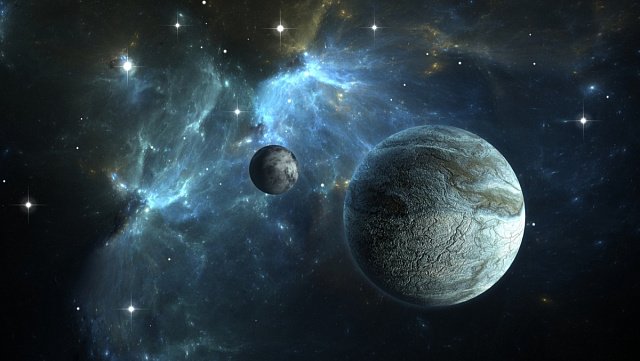

Researchers from Brazil’s National Observatory (ON) have identified eight exoplanets with statistical potential to host liquid water. Among them, GJ 1002b stands out, having demonstrated 98 per cent physical similarity to Earth. This was reported on the government’s
website.
Discovered in 2022, GJ 1002b is located 16 light-years from Earth and orbits a red dwarf star. The findings are based on an analysis of more than 6,000 exoplanets.
The research focused on the so-called Goldilocks Zone, also known as the habitable zone. This is the region around a star where orbital conditions may allow temperatures suitable for liquid water to exist on a planet’s surface.
Given the considerable distances separating Earth from these celestial bodies, the researchers applied specific criteria to ensure a careful assessment and minimise the risk of misleading interpretations.
The study was led by National Observatory researcher Fabio Calabrio Evangelista da Silva under the supervision of Marcelo Borges Fernandes. Earth served as the reference point for the analysis, with its physical characteristics and conditions for maintaining liquid water used as a benchmark.
Fernandes noted that the search for planets with Earth-like conditions does not rule out other possibilities for life in the Universe. According to the researcher, life could also exist in forms based on chemical and physical properties different from those currently known.