
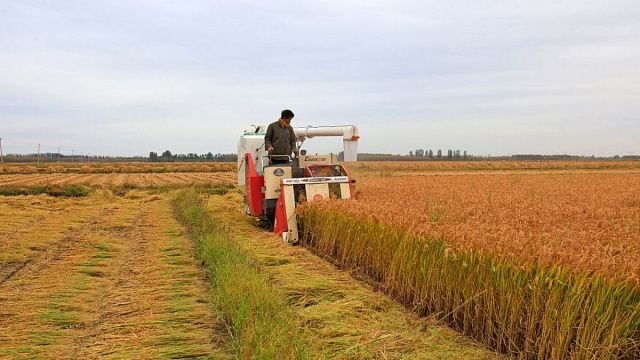

Heilongjiang Province is one of the earliest regions in China to develop, utilise and manufacture agricultural machinery, and is rapidly emerging as a key centre for high-tech, intelligent agricultural machinery. According to
Dongbeiwang, a partner of TV BRICS, by the end of 2025, Heilongjiang Province’s total agricultural machinery production capacity will reach 75,591,400 kilowatts, whilst the number of tractors in operation will reach 1,530,800.
Currently, Heilongjiang Province is home to over 100 agricultural machinery manufacturing enterprises and has established high-tech smart machinery manufacturing clusters in both Harbin and Jiamusi, comprising leading local firms and international industry leaders. Their products cover the entire value chain from tillage and sowing to crop management and harvesting, and the province’s mechanisation rate for sowing and harvesting has consistently ranked first in the country.
During the 15th Five-Year Plan period (2026–2030), the sector is transitioning from “total volume expansion” to “structural optimisation”: high-tech products such as high-power, variable-speed tractors and electric high-speed intelligent seeders are driving growth. The widespread application of autonomous driving, intelligent navigation systems and large-scale artificial intelligence (AI) models is accelerating the transformation of agriculture towards “unmanned, smart farms”.
In line with the “Opening Up to the North” strategy, the province is actively expanding into the Russian Far East market and markets in countries along the Belt and Road route. Thanks to its geographical advantages, the potential of these international markets will be realised at an accelerated pace.
The BRICS nations and their partners are continuing the global trend towards smart agriculture, committing to the research and development of high-tech mechanical engineering, the application of new technologies, and the modernisation of their own equipment through international cooperation.
Russia is actively researching and applying advanced agricultural technologies. According to the website of the Russian Ministry of Agriculture, the ministry has identified three key areas for enhancing the technical standards of domestically produced equipment. The first area concerns the application of natural gas-fuelled and hybrid tractors. Several companies are already developing gas-powered tractors and combine harvesters, while the Russian State Agrarian University – Moscow Timiryazev Agricultural Academy is also conducting research into hybrid tractors. The second area is the research and development of autonomous systems. Currently, Russia is developing highly automated tractors as well as robotic platforms for horticultural and agricultural operations. The third area involves the development of new specialised equipment that is not yet available in Russia.
Egypt and China are to jointly establish a smart agriculture laboratory at Benha University. The laboratory aims to utilise cutting-edge smart agriculture applications and digital technologies to address the increasingly severe challenges facing the agricultural sector, particularly climate change and water scarcity. The laboratory aims to promote sustainable agricultural development in Egypt and China, strengthen food security in both countries, and serve as a model of international scientific cooperation by combining the research capabilities of the two nations. According to Middle East News Agency (MENA), a partner of TV BRICS, the laboratory will focus on the research and development of drought-resistant crop varieties, as well as the application of Internet of Things (IoT)-based precision agriculture, remote sensing technology, big data analysis and agricultural genomics research.
Indonesia and Belarus continue to deepen their cooperation in the field of agricultural machinery. Belarusian Deputy Prime Minister Viktor Kalankevich noted that, thanks to its advanced mechanical engineering industry, Belarus is able to supply Indonesia with high-quality agricultural, automotive, municipal and passenger vehicles. According to TV BRICS partner BelTA, Belarusian experts have developed a light tractor specifically designed for rice cultivation to meet the needs of Indonesian agriculture, where farming is primarily carried out on small plots of land (30–50 acres).