
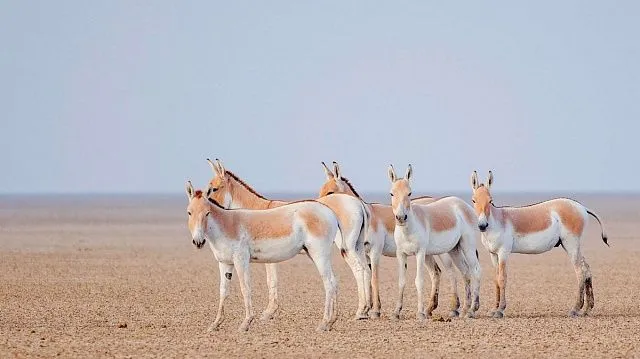

The population of kulans in Altyn-Emel National Park has increased more than one hundredfold over the past decades, rising from just 32 individuals to 3,571 in 2026 – one of the most successful wildlife restoration achievements in Kazakhstan, reports
Kazinform, a partner of TV BRICS.
Conservation specialists attribute the dramatic growth in the kulan population to a carefully managed reintroduction programme that began in the 20th century.
Today, the park not only sustains a stable kulan population but also supports reintroduction efforts in other regions. More than 300 animals have been relocated to protected areas across the country, helping restore ecosystems beyond the park’s boundaries.
Alongside the kulan recovery, conservationists have reported encouraging progress in monitoring rare predators. The presence of the snow leopard – long unconfirmed in the region – was officially recorded in 2021 through camera traps, marking a significant scientific breakthrough. Current estimates suggest that around 20 individuals inhabit the park and surrounding mountainous areas, with several fitted with satellite tracking devices for ongoing research.
Experts link this recovery to strengthened environmental protection measures and an increase in prey species, creating favourable conditions for the return of apex predators. The mountainous terrain of the park provides an ideal habitat, supporting biodiversity and ecological balance.
Additional conservation initiatives are also under way, including efforts to reintroduce bird species and preserve fragile ecosystems. Specialists emphasise that sustained environmental policies, habitat protection and scientific monitoring have been critical to these achievements.