
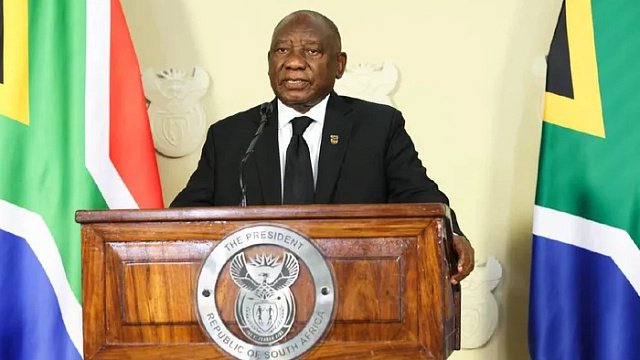

Matamela Cyril Ramaphosa was born on 17 November 1952 in Johannesburg. He studied law at the University of the North and the University of South Africa, obtaining a B.Proc degree in 1981. He began his career in the trade union movement, founding the National Union of Mineworkers in 1982. He later became Secretary-General of the African National Congress (ANC) and chaired the Constitutional Assembly that drafted South Africa’s Constitution. After serving as Deputy President from 2014, he became President on 15 February 2018 and was re-elected in June 2024.
Since taking office, Ramaphosa has placed considerable emphasis on strengthening South Africa’s international standing and expanding cooperation with partners across the Global South. This agenda was also reflected in his participation in the 18th BRICS Summit, held in New Delhi in September 2026.
At the summit, leaders endorsed the New Delhi Declaration, which sets out priorities in sustainable development, innovation, finance, healthcare and energy. The document also calls for a greater role for emerging and developing countries in global decision-making. South Africa, in turn, highlighted the importance of strengthening multilateral cooperation and reforming global governance.
Ramaphosa also maintained high-level dialogue with international partners. In February, he held a telephone conversation with Russian President Vladimir Putin, discussing trade, economic and investment cooperation, as well as coordination within BRICS and the G20. During the same month, he met Ethiopian Prime Minister Abiy Ahmed on the sidelines of the African Union Summit in Addis Ababa. Their talks focused on political coordination, economic relations and continental integration.
In March, Ramaphosa also paid a state visit to Brazil at the invitation of President Luiz Inacio Lula da Silva. Their discussions covered trade, energy, agriculture, education and technology, resulting in several bilateral documents, including an updated tourism action plan for 2026–2028.
South Africa also explored new opportunities for agricultural trade with China following Beijing’s announcement of a zero-tariff policy for goods from African countries maintaining diplomatic relations with China. South Africa and Iran also agreed to expand academic cooperation, including joint research, student and lecturer exchanges and the mutual recognition of qualifications. The discussions took place during the 13th BRICS Education Ministers’ Meeting in India.
In October, Egypt and South Africa launched a joint business council at the Alamein Africa Forum to strengthen ties between the two BRICS members. The initiative focuses on mining, renewable energy, agriculture, industry, transport and infrastructure, as well as the development of logistics facilities and shipping routes.
Through these initiatives, South Africa continues to strengthen partnerships across BRICS and beyond, promoting cooperation in trade, science, education, agriculture and tourism, and closer ties between emerging economies.