

The TV BRICS International Media Network presents a special project for the 20th anniversary of BRICS: “Global Media Briefing”. Expert commentary from representatives of the leading media of BRICS+ countries, partners of the media network, covers issues of shaping a unified global agenda, building a multipolar system of global media communications, current trends and key events of the past 20 years for the development of media discourse, and forecasts for the further evolution of the media landscape.
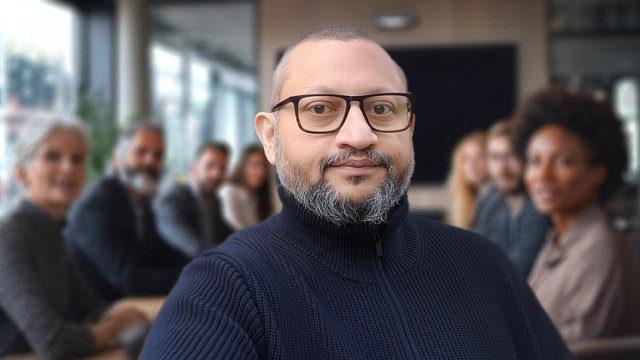
Which events reflect India’s role in strengthening global dialogue? How are media outlets adapting their work amid the growing popularity of social networks and artificial intelligence? Hector Kenneth Kumar, Executive Editor of ANI, answered these and other questions in an exclusive interview with TV BRICS.
What is your forecast for the development of media communications and the further evolution of the media landscape over the next 20 years in terms of approaches, technologies and narratives?
I feel that international journalism is no longer the privileged space of a few, but it’s now a global playground, with all of us, all news outlets, reporting on events across the world, drawing in stories that audiences in these countries will relate to, and also reporting these events in the context of our own countries.
If an event happens in, say, your country, Russia, then it’s not just about the Russian people who are affected. It’s also about people globally.
There are Indians in Russia, there are Indians across the world, and there are not just Indians but other people also. All these, when something becomes a global headline, it gets reported across the world. And it’s not just like earlier, when an event in India would have escaped headlines because it happened somewhere where people don’t really know who and what’s happening there.
What key elements should a shared global agenda include from the perspective of the development of media discourse?
In my opinion, we will, as media, continue to evolve. Newsrooms, as we go forward, will become more compact. The age of a very large newsroom with so many teams and all is really not succinct anymore. Social media and live media, as you know, have become more prevalent, and that is going to just grow. The era of individual storytellers, whether they are influencers or podcasters, is the new trend.
And also now, as artificial intelligence adopts a key role in the newsroom, issues that dominate the mediascape are more wide-ranging. Some of them are even hyper-local or hyper-global.
The evolution of the newsroom is critical. And also, journalism has also evolved because earlier there were big budgets. There was a wide – there was reach, and there were fewer players, so people could go and take time to report on certain events.
Now, because of the critical mass of smaller budgets and because you also need to be much faster because social media is so much faster, your newsroom tends to develop and think on its feet, which is very important now.
And also, I feel that as we go forward, collaboration between newsrooms will become a future model. Especially when we talk of our context, the BRICS context, I think that for us as BRICS nations, we need to understand how our compatriot nations, whether in Brazil or Russia or in South Africa, are reporting about their own events and about global events, because the sharing of ideas is going to be critical going forward.
What issues related to your country’s foreign agenda, civic initiatives, or specific upcoming events, from your point of view, should receive more attention from international and foreign media in order to fully demonstrate your country’s role and contribution to the development of multilateral relations and the strengthening of mutual understanding among nations?
Firstly, I think that people outside India should pretty much realise that India is no longer an outpost of the world. It is now the centre of the Global South, and the stories coming out of India are increasingly telling of a global impact.
We are at the centre of all discourse today. India is at the centre of a technological revolution.
And we are one of the youngest demographics in the world and a country that is consistently moving on the road to development.
For me, the story that needs to be told as we go forward, whether it’s by us or by organisations that come in from outside and look at us, has to be about a global India, about an India that is assertive, is dominant, and is at the centre of all conversations.
How can journalists from other countries help promote an accurate and up-to-date image of your country?
India and Indians are defining the world order. The stories of India, in terms of technology and economic achievement, need to be told with more vigour, especially by organisations that are not centred in India.
India is also now going to become the third-largest economy in the world. And as I said, the Indian economy will drive conversation going forward.
We are also a key member of BRICS. And as BRICS cooperation continues to extend, as we talk of more trade and more investment in the years going forward, and how this particular group, with its sizable population and sizable economic heft, will define global geopolitics going forward – that is the story that needs to be told.
There are different things, and there are so many technological advancements now in Russia, Brazil, China, and South Africa.
How do you view the idea of creating a unified Eurasian or global media space? And in what formats can and should cooperation between different media houses from different countries develop? And do you personally have experience of international cooperation with journalists or media houses from abroad, and how valuable and important has this experience been?
Right, so it is important for us to be part of this Eurasian narrative because this is a geography that has always had good relations in terms of country-to-country relations.
As far as our cooperation, as we speak of Asian News International, ANI itself, we have a lot of cooperation on a mutual understanding basis with a lot of broadcasters as well as text providers across the geography, especially in the BRICS geography.
We also cooperate with TV BRICS in telling various stories that come out of your region and the region of BRICS itself.
I think that this cooperation must continue because the world, as I said earlier, is a much smaller oyster.
I think, going forward, there should be more collaboration in terms of perhaps visits or exchanges of ideas between newsrooms.
That we are more in tune with how you, sitting in Russia, are viewing India, or you, sitting in South Africa, as part of BRICS, view India, and what India can do to further that narrative and to grow much closer in terms of cooperation.
Mr. Hector, what does true journalism mean to you? Name a media house or a specific journalist from any era or any country who, from your point of view, has an impeccable reputation and unquestionable authority.
I don’t want to take any specific names, but I think there have been journalists through the ages here in India who have been extremely productive and extremely good and taken a narrative that has helped shape national policy.
Now, in my opinion, journalism has two very important facets. One is truth to power, and the second is talking about the stories of the people. Now, as journalists, we must strive to achieve both of those.
If we can make an impact on the lives of people, our own people, whether it is especially those who are the last in the line in our countries, that will make a lot of difference.
We have to drive this through campaigns, through stories that we tell. When the world was facing the COVID epidemic, we saw how a country like India, a small country, I mean, in that particular sphere itself, was at the forefront of vaccine manufacturing.
I think those are the stories that will come forward. That is what journalism is. It is about telling the story of people.
We continue to be information providers and an information service, but we must exist to tell the story of people, to become what is known as the fourth and the most important pillar of our democratic system.
And in a group like BRICS, where there are such huge nations that command so much heft internationally, we must be able to tell stories from across these nations so that our people can also get closer to that geography.
