
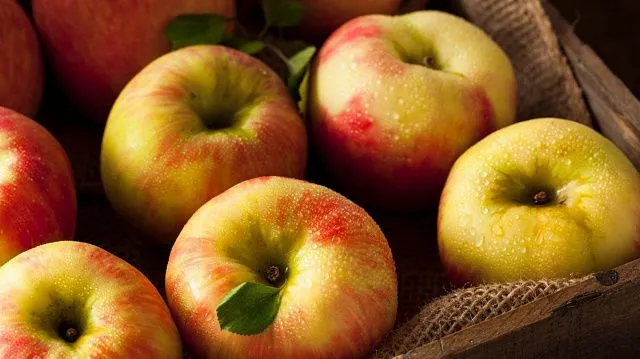

Kazakh scientists have developed and tested preparations based on lactic acid bacteria to protect apple trees from fire blight – a dangerous disease caused by the bacterium Erwinia amylovora. Studies on the Aport variety demonstrated an almost eight-fold reduction in the incidence of fire blight following two applications of the preparations. This was reported by Kazinform, a partner of TV BRICS.
The trials took place in apple orchards covering a total area of up to 500 hectares across three regions of the country. In the Turkestan Region, the protection efficacy reached 90–92 per cent, whilst the increase in yield exceeded 2 tonnes per hectare. In the Almaty Region, on the Aport variety, which is susceptible to the disease, the efficacy was up to 84 per cent, and the yield reached 1.5–2 tonnes per hectare.
According to the Ministry of Agriculture of Kazakhstan, the development is of particular practical significance for the preservation of the Almaty Aport – a historic apple variety characterised by high susceptibility to bacterial blight. The Republic is working to revive this variety.
The preparations were developed by specialists at the Kazakh Research Institute of Plant Protection and Quarantine named after Zhazken Zhiembayev in collaboration with the Institute of Microbiology and Virology. Scientists view the new products not as a replacement for all existing preparations but as an element of the phytosanitary protection system.